
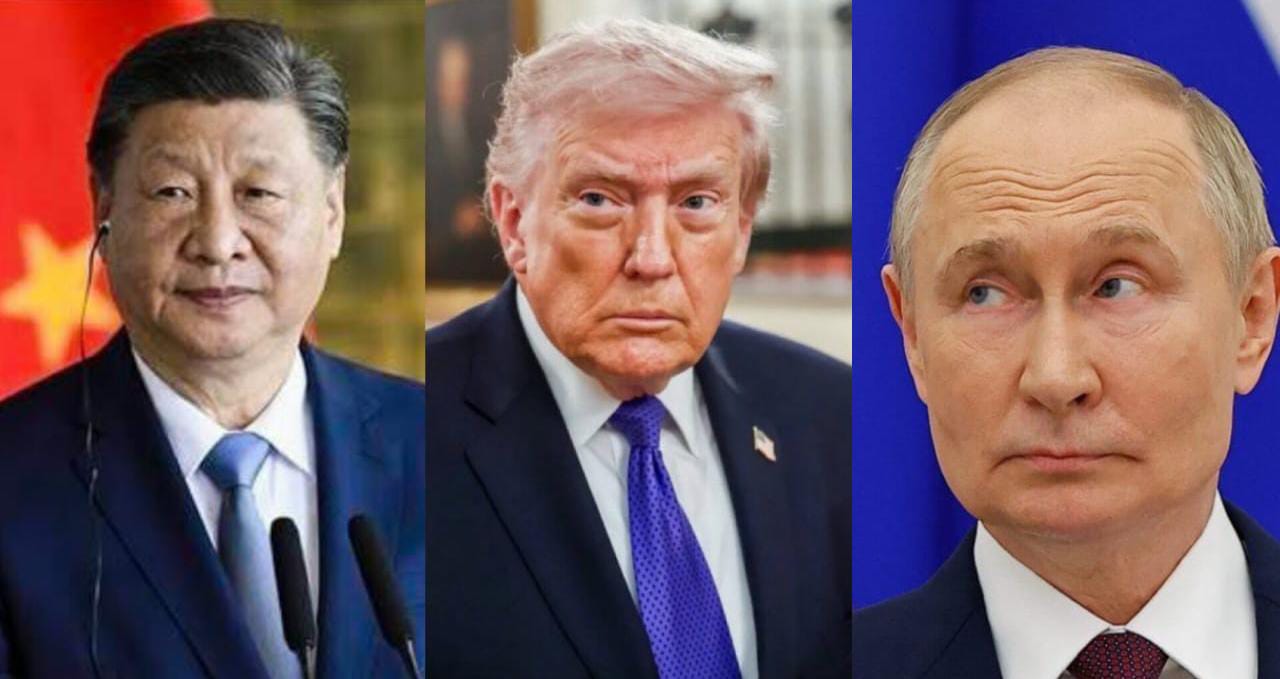
The presidents of the United States, Russia and China are preparing for a historic trilateral meeting expected to focus on nuclear weapons, the ongoing war involving Iran, international security and the future of global stability.
US President Donald Trump, Russian President Vladimir Putin and Chinese President Xi Jinping are scheduled to meet on Thursday, November 19, 2026, in Shenzhen, China, on the sidelines of the Asia-Pacific Economic Cooperation (APEC) summit.
The proposed gathering is attracting worldwide attention because it brings together the leaders of three major global powers whose decisions have far-reaching consequences for international politics, military security, global trade, energy supplies and diplomatic relations.
READ ALSO: ASEAN Summit: South China Sea Disputes, Myanmar Crisis and US-China Rivalry Take Centre Stage
The meeting, expected to be the first trilateral engagement involving the three leaders, is regarded as a significant diplomatic opportunity to discuss growing international tensions and explore possible areas of cooperation among Washington, Moscow and Beijing.
One of the major issues expected to dominate the discussions is nuclear weapons reduction and international arms control. Trump has expressed interest in encouraging the three countries to discuss reducing their nuclear arsenals, particularly following the expiration of the New START nuclear arms-control treaty between the United States and Russia in February 2026.
The issue is particularly important because the United States and Russia possess the world’s largest nuclear arsenals, while China has continued expanding its nuclear capabilities.
However, Beijing has expressed reservations about participating in nuclear arms-reduction negotiations on equal terms with Washington and Moscow, arguing that its nuclear stockpile remains considerably smaller than those of the two countries.
Another major issue expected to attract attention is the ongoing war involving Iran and its implications for Middle East security. Trump has indicated that he wants to discuss the conflict with Putin and Xi, whose countries maintain important strategic, economic and diplomatic interests in the region.
The discussions could provide an opportunity for the three leaders to exchange positions on preventing further escalation, protecting international energy supplies and exploring diplomatic approaches to regional stability. However, no common position or agreement has been announced ahead of the meeting.
The Russia-Ukraine war also forms part of the wider international diplomatic environment surrounding the gathering. Putin may seek opportunities to advance Russia’s position on the conflict, while Washington continues to play a significant role in diplomatic efforts concerning Ukraine. Nevertheless, US officials have indicated that the war is not expected to be a central subject of the proposed trilateral discussions.
Ukraine and its European partners remain concerned about any international arrangement that could affect the country’s sovereignty without its direct participation. Ukrainian President Volodymyr Zelenskyy has previously warned against major powers making decisions about Ukraine’s future without involving Kyiv.
Beyond military and security issues, the meeting comes amid growing economic and technological competition between the United States and China. Their disagreements include trade tariffs, advanced semiconductor technology, artificial intelligence, critical minerals and rare-earth resources.
For Trump, the gathering presents an opportunity to engage directly with Putin and Xi on nuclear security, international conflicts and the future of relations among the world’s major powers. It could also provide a platform for Washington to pursue diplomatic initiatives aimed at reducing international tensions.
For Putin, the meeting offers an opportunity to strengthen Russia’s diplomatic engagement with Washington and Beijing, discuss international security and reinforce Moscow’s position in global affairs.
For Xi, hosting the gathering provides an opportunity to demonstrate China’s growing diplomatic influence and promote Beijing’s position on international peace, strategic stability and cooperation among major powers.
The meeting has also revived comparisons with the 1945 Yalta Conference, where the leaders of the United States, Britain and the Soviet Union discussed the post-Second World War international order.
Some observers have raised concerns that major powers could make decisions affecting other countries without their participation. However, there is no established evidence that the three leaders intend to divide the world into separate spheres of influence.
The diplomatic implications of the gathering extend beyond Europe, Asia and the Middle East, particularly for African countries, including Nigeria. Any changes in relations among Washington, Moscow and Beijing could influence international oil and gas prices, trade, infrastructure investment, mining activities and access to technology.
African governments maintain important economic and diplomatic relationships with all three countries. Consequently, developments from the meeting could affect international cooperation, security partnerships, investment opportunities and the continent’s engagement with major global powers.