
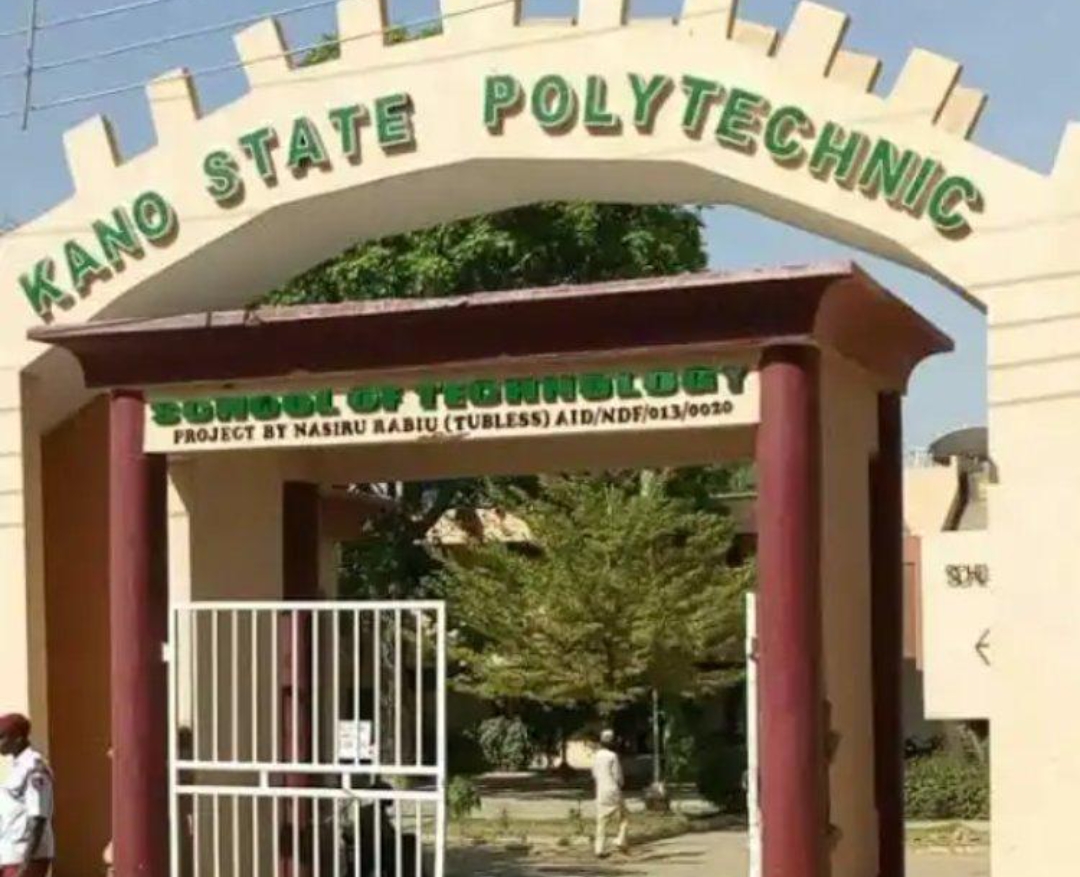
Nearly three years after Dr. Abubakar Umar Faruk was appointed Acting Rector of Kano State Polytechnic, questions are beginning to emerge over the leadership of the institution, the status of his appointment and the management of its financial and administrative affairs.
The concerns are not limited to the uncertainty surrounding his tenure. Complaints reportedly submitted by some Heads of Departments, challenges involving departmental funding and staff welfare, a recent query from the institution’s Governing Council and questions surrounding the accreditation of its Pharmaceutical Technology programme have brought the Rector’s administration under closer scrutiny.
With eight campuses under its management, Kano State Polytechnic is a major institution in Kano’s education sector. Its effective administration requires clear leadership, sound financial management, credible academic programmes and an institutional structure capable of responding to the needs of students and staff.
Yet, developments within the Polytechnic have raised questions about whether these responsibilities are receiving the attention they deserve.
An Acting Appointment That Needs Clarification
Dr. Faruk assumed office as Acting Rector on December 4, 2023, following the approval of Governor Abba Kabir Yusuf.
Nearly three years later, however, the status of his appointment remains a subject of public interest. Questions have been raised about whether he has been formally confirmed as substantive Rector or whether his acting appointment has been officially renewed.
Although reports have questioned the existence of documents confirming his substantive appointment or extending his acting tenure, the relevant authorities have yet to provide a comprehensive public clarification that settles the matter.
For a public institution of this size, the issue is more than a question of title. The Rector occupies a position central to policy implementation, administrative decisions, financial oversight and the general direction of the Polytechnic.
Staff, students and other stakeholders deserve to know the formal status of the person entrusted with these responsibilities.
The Kano State Government, the Ministry of Higher Education and the Governing Council therefore need to clarify whether Dr. Faruk has been confirmed and, if not, the official basis upon which he continues to serve in an acting capacity.
Eight Campuses And The Burden of Effective Management
Beyond the appointment question, the administration of the Polytechnic’s eight campuses presents another important area of concern.
Managing multiple campuses requires consistent supervision, timely funding, functional infrastructure and effective coordination between management, academic departments and other administrative units.
However, concerns have been raised over the release of departmental funds, payment of responsibility allowances, staff welfare and the provision of materials needed for practical academic activities.
These issues are particularly important because they have a direct bearing on the day-to-day running of the institution. Departments cannot function effectively without the resources required to carry out their responsibilities, while the absence of essential practical materials can affect the quality of training students receive.
For lecturers and other members of staff, delays in allowances and unresolved welfare concerns can also undermine morale and productivity.
While these complaints require proper investigation and a response from the Polytechnic’s management, they raise questions about how effectively the institution’s resources and administrative structures are being deployed to support its academic responsibilities.
Governing Council’s Query Raises Fresh Financial Questions
The concerns over the administration have taken on greater significance following a reported 14-day query issued to the Rector by the Polytechnic’s Governing Council over alleged financial and administrative irregularities.
The letter, signed by the Registrar and Secretary to the Governing Council, Alhaji Mukhtar Ibrahim Bello, reportedly followed complaints submitted by some Heads of Departments on November 10, 2026.
Among the complaints were the alleged non-release of departmental allocations, non-payment of responsibility allowances and failure to provide funds for practical consumables required for academic activities.
The Council also requested a comprehensive account of the institution’s internally generated revenue (IGR) from January 1, 2026.
The requested records reportedly cover revenue sources, collections, bank lodgements, account balances, expenditure, withdrawals and outstanding liabilities.
The demand for such detailed financial records places the management’s handling of public resources under scrutiny and highlights the importance of proper accounting procedures within the institution.
For a public polytechnic, internally generated revenue should be managed transparently, with clear records showing how funds are collected, where they are deposited and how approved expenditure is undertaken.
The Council’s intervention also brings into focus the relationship between the institution’s management and its governing authority, particularly concerning financial reporting and the provision of resources for academic departments.
It must, however, be emphasised that a query is an administrative demand for explanation, not proof of wrongdoing. The Rector is entitled to respond to the allegations, while the Council is expected to examine the explanations and take any necessary action in accordance with established procedures.
Nevertheless, the issues raised deserve attention because they concern the resources and conditions needed to keep the institution running effectively.
Pharmaceutical Technology Programme Raises Accreditation Concerns
Beyond the questions surrounding leadership and financial management, another issue requiring urgent clarification concerns the accreditation status of the Pharmaceutical Technology programme being offered by Kano State Polytechnic.
Questions have emerged over the programme’s accreditation status and whether it currently meets the regulatory requirements for the award of National Diploma (ND) and Higher National Diploma (HND) qualifications.
The concern is particularly significant because accreditation is fundamental to the credibility of academic programmes and the recognition of qualifications awarded by tertiary institutions.
If there are outstanding accreditation issues affecting the programme, the Polytechnic’s management owes students, parents and the wider public a clear explanation of the situation.
Why does the institution continue to admit students, conduct examinations and award ND and HND qualifications in Pharmaceutical Technology if there are unresolved questions about the programme’s accreditation ?
Has the programme received the necessary accreditation from the National Board for Technical Education (NBTE), and, if so, what is the current scope and validity of that approval?
Equally important is the situation of students who have already graduated from the programme. What is the status of their ND and HND certificates? Are their qualifications fully recognised for further studies, employment and other relevant professional opportunities?
These questions are not merely administrative. They concern the future of students who have invested years of their lives and considerable resources in obtaining qualifications from the institution.
Graduates should not be left uncertain about the recognition of their certificates or the opportunities available to them because of accreditation issues that ought to be clearly communicated and properly addressed by the institution.
The Polytechnic’s management, the NBTE and other relevant regulatory authorities therefore need to establish the facts and explain the position of the programme, including any limitations, accreditation conditions or remedial steps that may apply.
If there are no accreditation deficiencies, the institution should make the relevant documentation available to put the concerns to rest.
Ultimately, students deserve more than admission letters and graduation ceremonies. They deserve the assurance that the qualifications they earn are properly recognised and will not become an obstacle to their academic and professional ambitions.
The Rector’s Response Leaves Issues Unresolved
As part of its efforts to establish the facts, The Historica Nigeria recently contacted Dr. Faruk to seek his response to questions surrounding his appointment, the institution’s administration and the financial concerns raised by staff and the Governing Council.
However, the engagement did not produce the substantive clarification the publication had sought. Instead, the Rector reportedly questioned the correspondent’s knowledge of journalism and professional ethics.
While the exchange was disappointing, The Historica Nigeria maintains that seeking explanations from public office holders about the administration of public institutions and the management of public resources is a fundamental responsibility of journalism.
The purpose of the inquiry was to obtain the Rector’s account, establish the facts and provide him with an opportunity to address the concerns surrounding his administration.
The publication remains open to receiving and publishing his response, including any relevant documents that could clarify the issues raised.
The questions that cannot be ignored
The developments at Kano State Polytechnic leave the state government and the institution’s Governing Council with important matters to address.
First is the formal status of Dr. Faruk’s appointment. Has he been confirmed as substantive Rector, or is he still serving in an acting capacity? If the latter, what official approval supports the continuation of his tenure?
There is also the question of the complaints from Heads of Departments. What has the management done to address the alleged non-release of departmental allocations, unpaid responsibility allowances and inadequate funding for practical activities?
Equally important is the Governing Council’s demand for a comprehensive account of internally generated revenue. Has the management provided the requested records, and what steps will the Council take to address any discrepancies or shortcomings identified?
The accreditation question is no less urgent. What is the current regulatory status of the Pharmaceutical Technology programme? Are its ND and HND qualifications fully accredited, and what protection is in place for students and graduates if any accreditation deficiencies exist?
These are not questions that should be dismissed as internal disagreements. They concern the administration of public resources, the welfare of employees, the credibility of academic qualifications and the quality of education delivered to students.
An Institution That Deserves Better
Kano State Polytechnic occupies an important place in the state’s education and human capital development efforts. Thousands of students depend on the institution for the knowledge and practical skills needed to build their futures, while its staff look to management for the resources and working environment required to perform their duties.
That responsibility demands leadership that is properly constituted, transparent and responsive to institutional needs.
The state government and the Governing Council must provide clarity on the Rector’s appointment, ensure that the financial concerns raised are thoroughly examined and address any administrative weaknesses affecting the institution.
The relevant regulatory authorities must also clarify the accreditation status of the Pharmaceutical Technology programme and ensure that the academic and professional interests of affected students and graduates are protected.
Ultimately, the issue goes beyond Dr. Faruk’s position. It is about the direction of Kano State Polytechnic, the quality of its administration, the credibility of its academic programmes and whether the resources entrusted to its management are being used in the best interests of the institution.
For students, staff, parents and the wider public, the expectation is straightforward: a polytechnic with eight campuses should have a clear leadership structure, accountable financial management, properly accredited academic programmes and an administration capable of delivering on its responsibilities.
Global Tracker believe that Kano State Polytechnic deserves nothing less.