
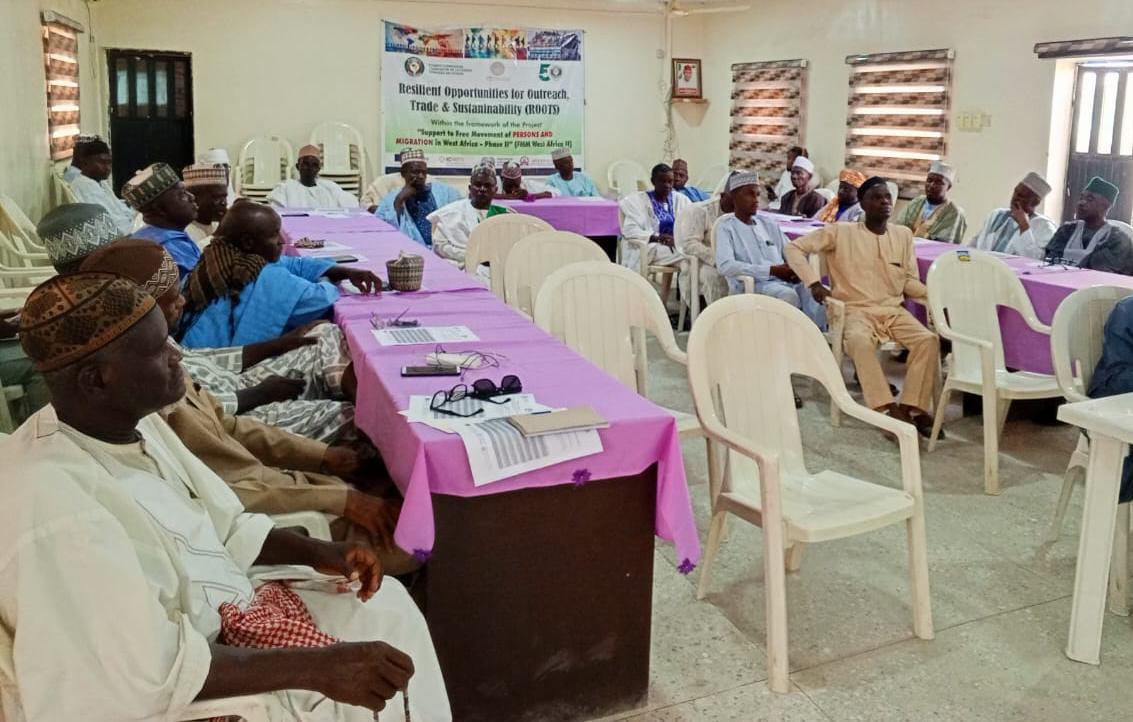
Stakeholders participating in a two-day policy dialogue on irregular migration in Kano State have called for stronger grassroots sensitization, expanded skills-acquisition programmes and greater empowerment of traditional institutions as part of measures to discourage young people from embarking on dangerous migration journeys.
The stakeholders also agreed to organise town-hall meetings that would bring together traditional rulers, community leaders, civil society organisations, youths, women, parents and security agencies to develop collective community-based responses to irregular and undocumented migration.
The Policy Dialogue with Traditional Leaders and Local Government Authorities and Outcome Harvesting Meeting was organised by the Adolescent Health and Information Project (AHIP) as part of efforts to promote safe, legal and regular migration while addressing factors encouraging young people and women to undertake dangerous journeys abroad.
Participants were drawn from nine local government areas of Kano State, namely Dala, Gwale, Kano Municipal, Ungogo, Tarauni, Nassarawa, Kumbotso, Fagge and Bunkure.
The engagement brought together traditional and local government leaders, government institutions, civil society organisations, women and youth groups and community representatives.
AHIP Executive Director, Hajiya Mairo Bello, said the programme was designed to mobilise traditional institutions, local authorities, government agencies, civil society organisations, women and youth groups and community representatives to sensitise people on the dangers associated with irregular migration.
She said AHIP through its ROOTs-programmed was particularly concerned about young people and women who are vulnerable to dangerous migration routes, stressing the need to encourage people to explore safe, legal and documented migration pathways.
The AHIP intervention comes against the background of Kano’s established role as a migration route and return point. In August 2026, AHIP said returned migrants were arriving in Kano almost weekly, while the National Commission for Refugees, Migrants and Internally Displaced Persons (NCFRMI) disclosed that 5,780 returnees had arrived through Kano routes between January and August 2026.
AHIP’s ROOTS programme, implemented in collaboration with the International Organization for Migration (IOM) with European Union support under the Free Movement of Persons and Migration in West Africa Phase II initiative, focuses on safe and regular migration, migrants’ rights, livelihood support, reintegration and community engagement.
Speaking during the dialogue, Khadija Imam Abdullahi, Women Development Officer, Gwale Local Government Area, said Kano State and Nigeria were losing productive young people to irregular migration.
According to her, many youths who embark on dangerous migration journeys lose their lives before reaching their destinations, while some suffer severe forms of violence, including being decapitated.
She observed that only a very small number of those undertaking such journeys eventually succeed in reaching foreign countries, particularly destinations in Europe, making it necessary for government and communities to address the factors pushing young people into irregular migration.
Abdullahi called on governments at all levels to strengthen skills-acquisition centres and revamp vocational and technical training institutions to provide young people with practical means of livelihood.
She said youths needed to be equipped with skills that would make them productive and self-reliant rather than leaving them without opportunities and potentially becoming burdens on, or causing problems within, their communities.
She proposed the establishment of 20 skills-acquisition and vocational centres in each of Kano State’s 44 local government areas, which would amount to 880 centres if implemented as proposed.
According to her, the centres should focus on practical and people-oriented skills capable of providing sustainable, year-round sources of income, including solar installation, automobile mechanics, building and construction-related trades and other viable businesses.
She argued that providing youths with practical skills and opportunities for sustainable livelihoods would reduce unemployment and give young people alternatives to dangerous migration journeys.
Also speaking, Yusuf Labaran Bunkure, a Village Head in the headquarters area of Bunkure Local Government Area, called for greater empowerment and support for traditional institutions to enable them to play their role effectively in tackling irregular migration.
He said District, Ward and Village Heads were strategically positioned to identify the factors encouraging young people to leave their communities through unsafe routes because of their close contact with grassroots residents.
Labaran urged government and other stakeholders to equip traditional leaders with the necessary information, resources and institutional support to strengthen sanitization at community level.
He also raised concern over the activities of people locally identified as “agents”, whom he said sometimes instigate or persuade individuals to embark on irregular migration.
According to him, the activities of such agents have contributed to young people undertaking dangerous journeys, with many migrants losing their lives along the routes.
He called for stronger grassroots awareness campaigns and closer collaboration between traditional institutions, government agencies, civil society organisations and security agencies to identify and address activities capable of encouraging dangerous migration.
Participants interviewed by Global Tracker correspondent, Sani Magaji Garko, similarly stressed the importance of parents, traditional rulers, community leaders and non-governmental organisations in preventing young people from embarking on dangerous migration journeys.
They said parents should pay closer attention to the aspirations and challenges confronting their children, while traditional and community leaders should intensify dialogue with families and youths.
The participants also stressed the need for NGOs and government agencies to provide accurate information on regular migration pathways and ensure that potential migrants understand the dangers associated with trafficking, exploitation, forced labour, abuse and death along irregular routes.
The concern is particularly significant given Kano’s position along regional migration routes. AHIP has previously said Kano serves as a transit point for people travelling to neighbouring African countries, while more than 200 returning migrants had been trained under the ROOTS programme in agribusiness and livelihood development.
At the end of the dialogue, participants agreed to organise town-hall meetings that would bring together traditional rulers, community leaders, civil society and human rights groups, youths, women, parents and security agencies.
The proposed meetings are expected to provide platforms for stakeholders to discuss the causes and consequences of irregular migration, share information, identify vulnerable persons and develop community-based mechanisms for prevention.
Participants said the involvement of security agencies would also help communities understand the risks of trafficking and deceptive recruitment, while allowing traditional and community leaders to report suspicious activities and protect vulnerable youths.
They emphasised that tackling irregular migration required collective action involving families, traditional institutions, government authorities, civil society organisations, security agencies and development partners.
The dialogue consequently ended with a renewed call for stronger community participation and coordinated intervention to protect Kano youths and other Nigerians from the dangers associated with irregular and undocumented migration.