
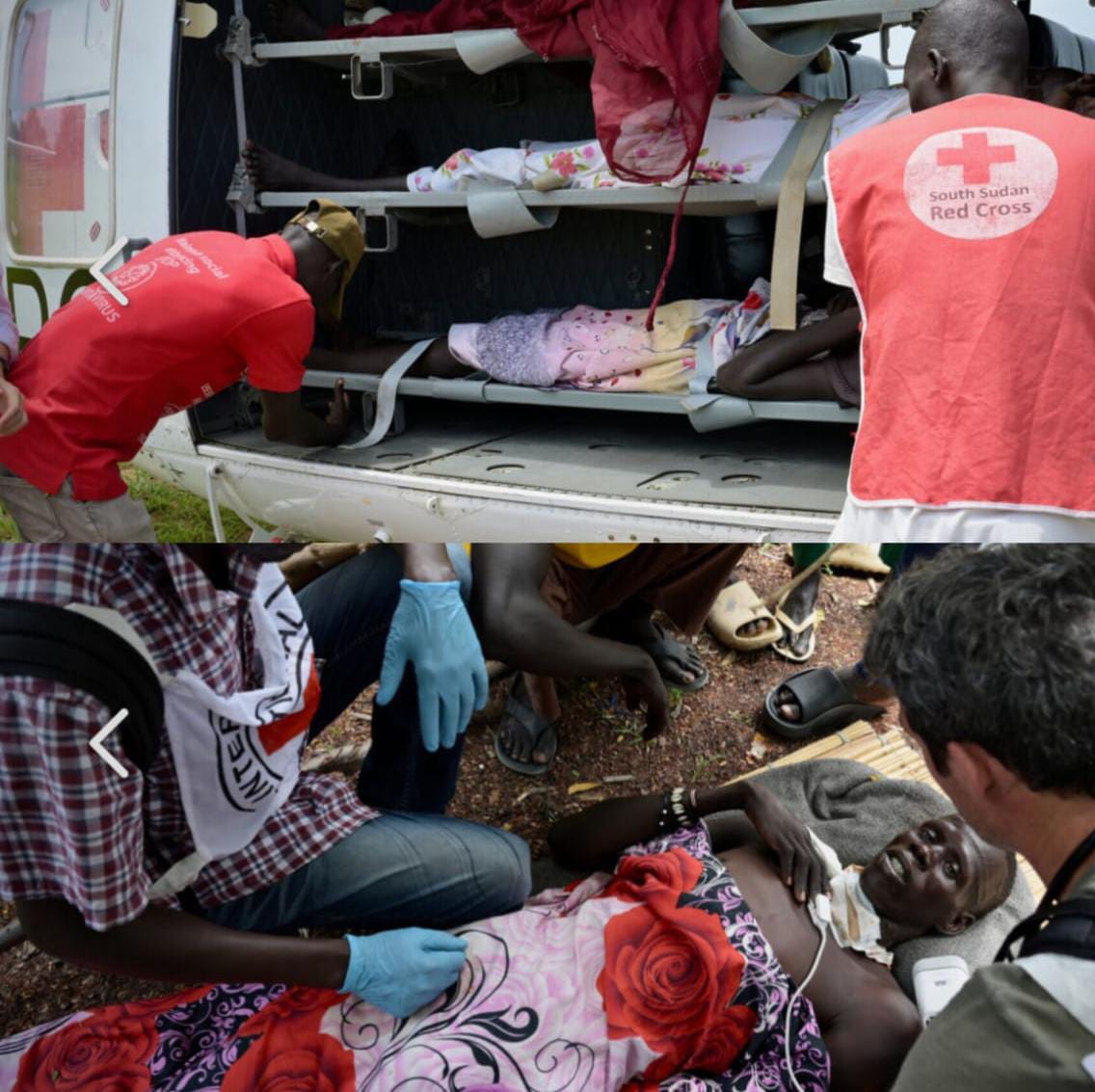
The International Committee of the Red Cross (ICRC) has evacuated 266 wounded patients across South Sudan during the first six months of 2026, marking an increase of more than 50 per cent compared with the same period last year as renewed fighting continues to overwhelm the country’s fragile healthcare system.
ICRC disclosed this in a statement sent to journalist, a copy of which was sent to GLOBAL TRACKER.
The humanitarian organization said the sharp rise in medical evacuations reflects the worsening impact of armed conflict, which has intensified since late 2025, leaving thousands of people dead or injured and forcing countless families to flee their homes.
READ ALSO: ICRC Ramps Up Emergency Support as Venezuelan Earthquake Kills Nearly 3,000 People
The increase comes as South Sudan marks 15 years of independence, with humanitarian agencies warning that conflict, insecurity, climate-related disasters and dwindling international funding are pushing vulnerable communities deeper into crisis.
Conflict Fuels Rising Medical Emergencies
According to the ICRC, renewed violence has displaced thousands of families, disrupted livelihoods and severely restricted access to healthcare, particularly in remote communities where hospitals are either non-existent or inaccessible.
The fighting has also resulted in a growing number of people requiring urgent surgical treatment, placing enormous pressure on already overstretched trauma services.
“Conflict is not getting any better and the humanitarian needs are also on the rise,” said Rose Ochieng, the ICRC Health Coordinator in South Sudan.
“This is further complicated by the fact that funding has gone down. So, service provision at all levels of healthcare is reduced, and this causes a lot of strain at hospital level.”
Over 5,000 Patients Evacuated Since 2014
The ICRC revealed that it has evacuated more than 5,000 wounded patients for life-saving surgical treatment across South Sudan since 2014.
Most patients are airlifted from remote and conflict-affected areas to Juba Military Hospital, one of the country’s main trauma referral centres.
The hospital has experienced a significant increase in admissions, with surgeries during the first half of 2026 rising by nearly 30 per cent compared with the same period in 2025.
As a result, the ICRC-supported surgical department is operating at more than 100 per cent capacity, highlighting the growing strain on medical personnel and facilities.
Survivor Recalls Ordeal
Among those evacuated was Ngor Gatluak, who was wounded during fighting in Agany, a remote community in Jonglei State, located about 420 kilometres from Juba.
“I was shot in my arm during one of the battles,” Gatluak said.
“There is no hospital in our area, so I was taken from Agany for treatment. I was later referred to this hospital. I am feeling much better now, and I hope to return home soon.”
His story reflects the reality facing thousands of South Sudanese living in isolated areas where healthcare facilities remain scarce.
Remote Communities Cut Off
The ICRC warned that access to life-saving healthcare remains severely limited across many parts of the country.
In regions repeatedly affected by fighting, damaged roads, poor transport infrastructure and unreliable mobile communication networks make it extremely difficult for wounded civilians to reach hospitals.
The organization said the pressure extends far beyond emergency evacuations, affecting:
– Surgical services;
– Referral systems;
– Physical rehabilitation;
– Mental health support;
– Post-operative follow-up care.
Humanitarian officials caution that South Sudan’s national health system is struggling to meet growing demand.
Independence Overshadowed by Humanitarian Needs
As South Sudan commemorates 15 years since gaining independence, the ICRC said ensuring access to emergency surgical care remains one of the country’s most urgent humanitarian priorities.
The organization reaffirmed its commitment to working alongside health authorities and the South Sudan Red Cross (SSRC) to ensure that people affected by conflict continue receiving lifesaving medical treatment regardless of their location or background.
Call to Respect International Humanitarian Law
The ICRC also renewed its appeal to all parties involved in the conflict to comply with International Humanitarian Law.
The organization urged combatants to:
– Respect and protect healthcare workers and medical facilities;
– Collect and evacuate the wounded and sick without discrimination;
– Ensure unhindered access to life-saving healthcare;
– Facilitate the rapid and safe delivery of humanitarian assistance to civilians in need.
The ICRC stressed that protecting medical services during armed conflict is both a legal obligation and a humanitarian imperative.
With violence continuing to spread and humanitarian funding declining, aid agencies warn that South Sudan’s already fragile healthcare system faces mounting pressure, leaving thousands of conflict victims dependent on emergency medical evacuations for survival.
The ICRC also in a letter to the editor of this newspaper reminded some of achievements it recorded in South Sudan from 2014 to date which includes;
- Almost 9,000 weapon-wounded patients have been admitted for treatment in ICRC-supported surgical facilities across South Sudan, receiving life-saving and specialized trauma care.
- ICRC surgical teams have performed more than 29,000 life- and limb-saving surgeries through a combination of fixed surgical facilities and Mobile Surgical Team deployments, bringing specialized trauma care closer to people affected by armed conflict while maintaining referral capacity for complex cases.
- More than 5,000 weapon-wounded patients have been safely transferred from conflict-affected areas across South Sudan to access emergency surgery, specialized treatment, physical rehabilitation, and mental health and psychosocial support.
- Between 2014 and 2025, nearly 40,000 persons with disabilities accessed essential physical rehabilitation services through ICRC-supported centres in Juba, Wau, and Rumbek, helping people regain mobility, independence, and social inclusion.