
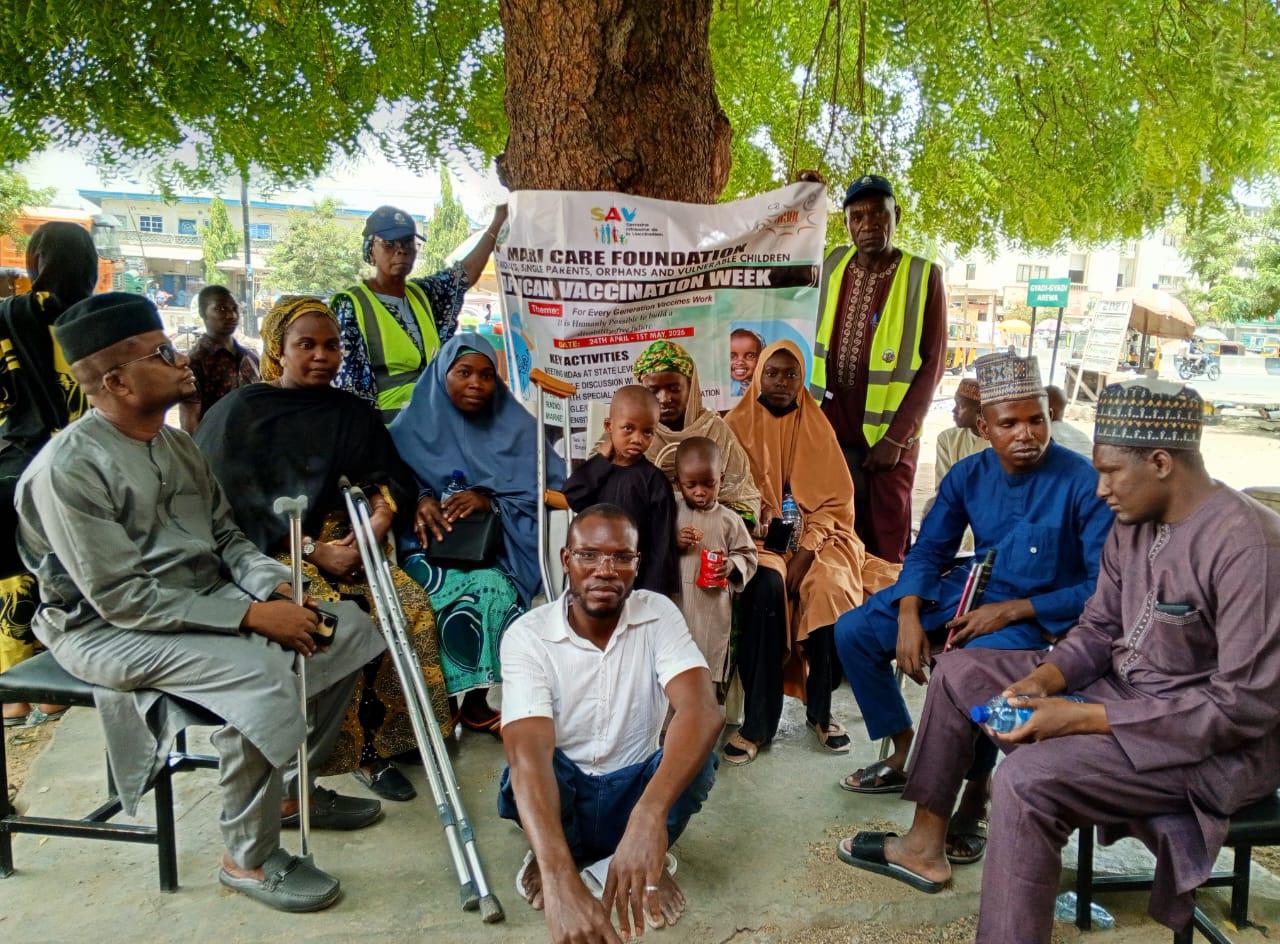
The Mari-Care Foundation for Widows, Single Parents, Orphans and Vulnerable Children Nigeria has hosted a stakeholders’ roundtable discussion with a strong focus on persons with special needs, advocating for increased vaccination uptake across all age groups as part of activities marking the African Vaccination Week 2026.
The engagement brought together persons with disabilities, health professionals, caregivers, and community leaders to examine the challenges limiting access to immunization and to promote inclusive strategies that ensure vaccines reach everyone, regardless of age or physical condition.
Central to the discussion was the 2026 theme, “For Every Generation, Vaccines Work,” which participants said reinforces the importance of immunization as a lifelong health intervention.
They stressed that vaccines are not only essential for children but remain critical for adolescents, adults, and the elderly in preventing diseases and safeguarding public health.
A defining feature of the roundtable was the series of personal testimonies shared by participants with special needs, highlighting the real-life consequences of gaps in immunization and healthcare access.
Among them, Yahaya A. Yahaya, a physically challenged and leader of an association championing the welfare of persons with special needs, delivered an emotional account of his experience.
“I suffered for many years as a result of polio. At a point, my legs were almost amputated. This is why I strongly support vaccination and awareness—no one should have to go through what I experienced,” he said.
He used the opportunity to call for stronger welfare support systems for persons living with disabilities, urging government and stakeholders to prioritize inclusive healthcare and social protection.
“Beyond vaccination, we need sustained support for people with special needs. Our welfare must be taken seriously, and we must be included in every policy that concerns health and development,” he added.
Also speaking, Abdurazaq, a visually impaired person and former Special Adviser to the Kano State Governor on persons with special needs, raised concerns over what he described as the nonchalant attitude of some healthcare professionals toward persons with disabilities.
“Many people with special needs still face neglect and poor treatment when they visit health facilities. Some healthcare workers do not show the level of care and attention required,” he said.
“There must be deliberate action to address this. We need accountability, training, and policies that ensure healthcare providers treat persons with disabilities with dignity and respect,” he added.
Many highlighted barriers such as inaccessible health facilities, inadequate communication tailored to their needs, and social stigma that often discourages participation in vaccination programmes.
Stakeholders noted that these lived experiences must inform policy and programme design, calling for deliberate efforts to make immunization services more inclusive.
Suggested measures included mobile outreach services, disability-friendly health communication, and stronger collaboration between government agencies and civil society groups.
Participants also emphasized that it is possible to build a future where vaccine-preventable diseases and the disabilities they may cause are significantly reduced, while ensuring that persons living with disabilities are fully included in healthcare planning and delivery.
The Mari-Care Foundation reiterated its commitment to raising awareness on the importance of vaccines and ensuring that vulnerable populations including widows, single parents, orphans, and persons with special needs are not left behind in immunization efforts.
The roundtable concluded with a collective call for sustained advocacy, improved funding, and inclusive health policies to guarantee that vaccination benefits reach every generation, reinforcing the message that vaccines work for all.