
By: Nasiru Muhammad Waziri
Growing concerns are mounting among residents of Kano State over what many describe as the gradual decline of the state-owned Abubakar Rimi Television (ARTV), with complaints ranging from alleged indiscriminate tree felling and poor programme content to ineffective management and slow adaptation to modern broadcasting realities.
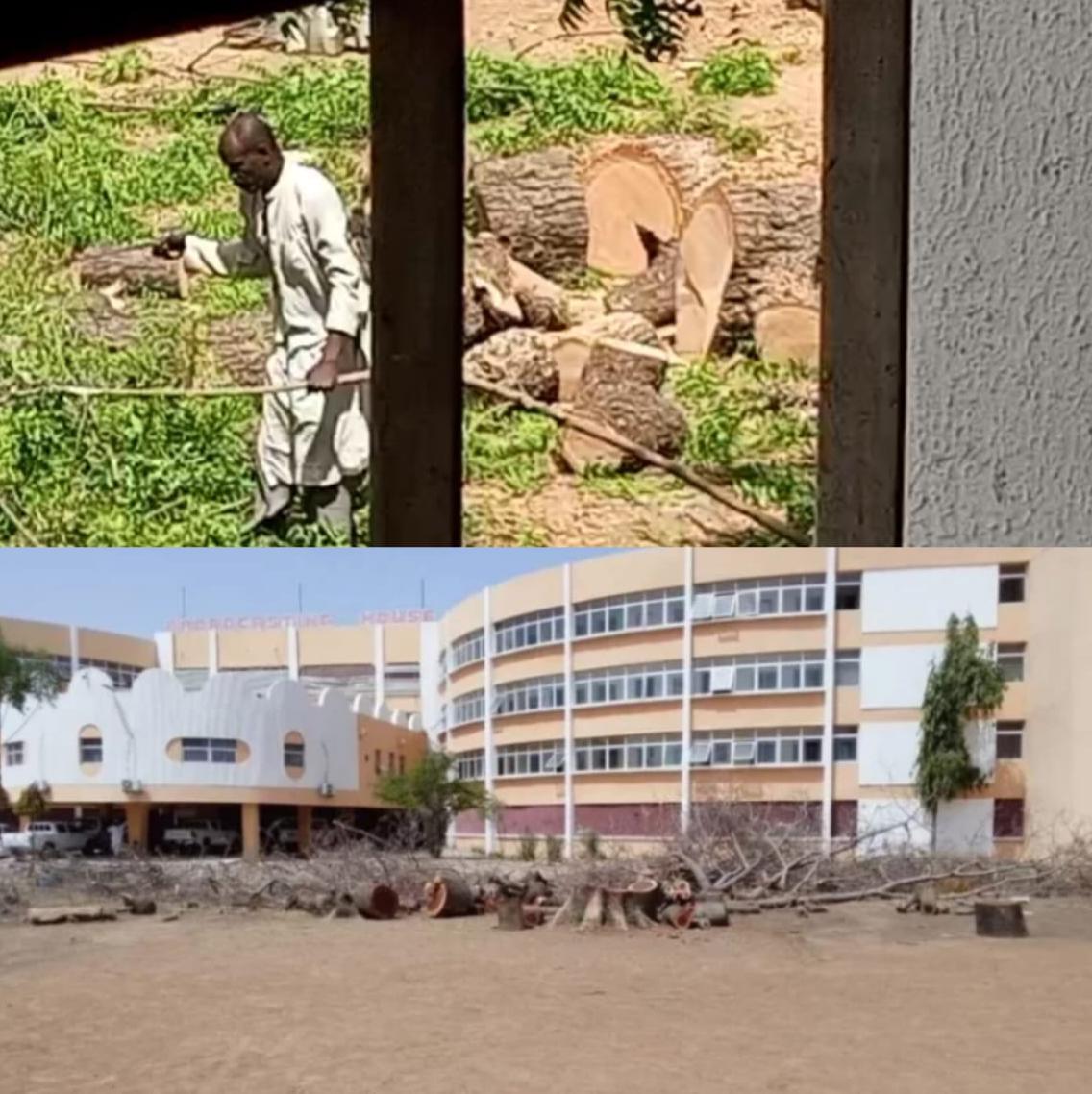
The concerns have sparked public debate in recent days following reports of tree-cutting activities within the premises of the television station located in Hotoro, as well as criticisms over the quality of programming and the station’s overall performance.
Some residents who spoke to GLOBAL TRACKER correspondent expressed disappointment that a station many consider a symbol of Kano’s broadcasting heritage appears to be struggling to maintain its relevance in an increasingly competitive media environment.
One of the residents, Abdullahi Isma’il, said many viewers still have deep affection and emotional attachment to ARTV because it remains the only television station wholly owned by the Kano State Government.
According to him, generations of Kano residents grew up watching the station and continue to regard it as their own platform for information, education, and entertainment.
However, he lamented that reports of tree felling, coupled with what he described as poor programme content and declining audience appeal, have forced many viewers to seek alternative television stations despite their loyalty to ARTV.
“We love ARTV because it belongs to Kano people. We grew up watching the station and would like to continue doing so. Unfortunately, the quality of programmes and some of the issues being reported are discouraging many viewers. People are gradually switching to other stations even though they still have emotional attachment to ARTV,” he said.
Another resident, Musbahu Saminu, strongly criticized the reported tree-cutting activities within the station’s premises, describing the development as unacceptable.
He called on Governor Abba Kabir Yusuf to thoroughly investigate the matter and take necessary action against any official found responsible for wrongdoing.
According to him, public institutions should serve as examples in environmental protection rather than contribute to environmental degradation.
“If anyone is found wanting after proper investigation, appropriate action should be taken. Government institutions must uphold environmental standards and protect public assets,” he stated.
Historica Nigeria Report Sparks Debate
The controversy gained wider public attention after Kano-based online newspaper ‘The Historica Nigeria’ published reports alleging extensive tree felling within the premises of ARTV.
The publication reported concerns raised by residents of Hotoro and surrounding communities, who argued that the removal of trees could pose environmental risks and negatively affect the ecosystem around the station.
Residents reportedly warned that trees play critical roles in environmental protection, including temperature regulation, erosion control, air purification, and climate resilience.
The reports generated widespread discussions among media stakeholders, environmental advocates, and members of the public, many of whom called for greater accountability and transparency regarding the activities taking place within the station.
Kano Information Commissioner Intervenes
Amid growing public concern, the Kano State Commissioner for Information and Internal Affairs, Comrade Ibrahim Abdullahi Waiya, paid an unscheduled visit to the television station on Saturday to assess the situation firsthand.
The commissioner’s observations were contained in a statement issued by the Director of Information, Kano State Ministry of Information and Internal Affairs, Ameen Kabeer Yassar.
According to the statement, Waiya expressed concern over both the reported tree-cutting activities and the overall state of operations at the station.
He immediately directed the suspension of all tree-felling activities within the premises and ordered that no tree should be cut in the future without obtaining approval from relevant government agencies responsible for environmental protection and forestry management.
The commissioner stated that indiscriminate depletion of natural resources, particularly trees, runs contrary to the environmental protection and climate change policies of the administration of Governor Abba Kabir Yusuf.
Beyond the environmental concerns, Waiya also expressed dissatisfaction with the quality of programmes being aired by the station.
According to the ministry’s findings, ARTV has fallen short of public expectations due to stale programme content, weak news production quality, inadequate digital transformation, and limited audience engagement.
The commissioner noted that many contemporary television stations have embraced modern broadcasting technologies and digital platforms, while ARTV has remained largely conservative in its operational approach.
He stressed that such a situation does not reflect the vision of the present administration, which prioritizes innovation, modernization, and efficient public service delivery.
Waiya disclosed that he would submit a comprehensive report to Governor Abba Kabir Yusuf recommending measures aimed at repositioning the station through institutional reforms, digital upgrades, staff capacity development, improved programme content, and stronger operational efficiency.
He also emphasized the need for transparency, accountability, and effective utilization of budgetary allocations to improve the station’s performance.
Management Denies Allegations
However, the management of ARTV has rejected allegations that it engaged in indiscriminate or excessive tree felling.
The station maintained that only a limited number of trees were removed and insisted that the action was taken strictly for security and operational reasons.
According to management, the affected trees posed security concerns within the station’s premises, and their removal was intended to improve visibility and safeguard facilities.
Officials of the station therefore dismissed claims suggesting that large-scale environmental destruction had occurred.
The Deputy Managing Director of ARTV, Malam Idris Abba Musa, also acknowledged that the organization faces operational challenges, including bureaucratic bottlenecks, inadequate staff training, and limited digitization of broadcasting facilities.
He expressed optimism that government intervention and support would help address the challenges confronting the station and improve its competitiveness within the broadcasting industry.
However, the video clips obtained by GLOBAL TRACKER tell different story.
Calls for Reforms
As public debate continues, many residents, media professionals, and stakeholders are calling for comprehensive reforms to restore ARTV’s status as a leading public broadcaster in Kano State and Northern Nigeria.
Observers believe that improvements in programme quality, digital broadcasting infrastructure, environmental management, staff development, and institutional accountability will be crucial to rebuilding public confidence and attracting viewers back to the station.
For many Kano residents, the concern is not merely about a television station but about preserving an institution that has long served as an important voice for the state.
Whether the recent intervention by the Ministry of Information will lead to meaningful reforms remains to be seen, but residents insist that urgent action is necessary if ARTV is to regain its relevance and fulfill its mandate as Kano State’s flagship public broadcaster.