
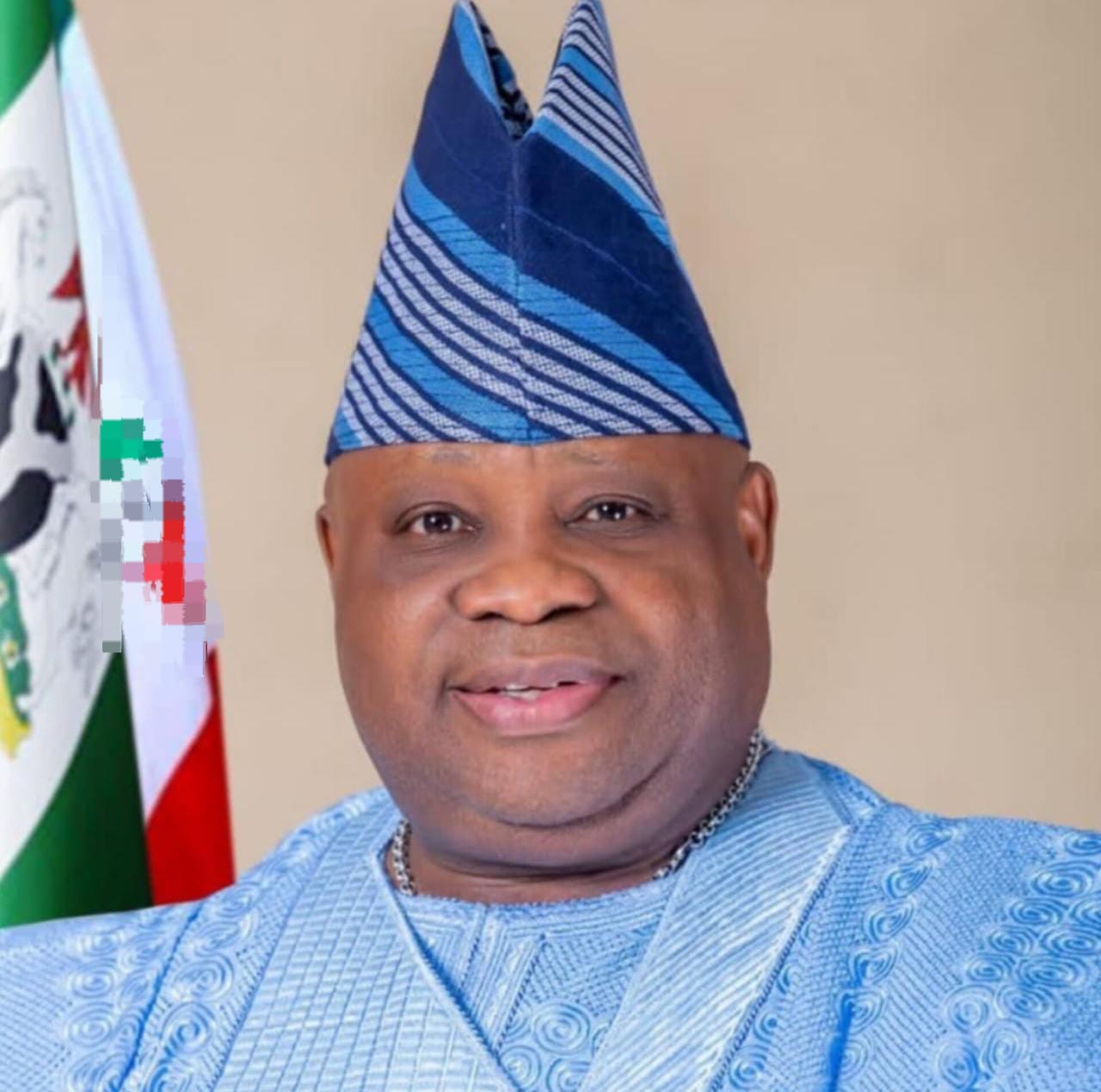
Governor Ademola Adeleke of the Accord Party has defeated the All Progressives Congress (APC) candidate, Bola Oyebamiji, to win a second term as governor of Osun State.
The Independent National Electoral Commission (INEC) declared Adeleke winner of Saturday’s governorship election on Sunday after the completion of collation of results from the state’s 30 local government areas.
The State Returning Officer, Prof. Joshua Olalekan Ogunwole, announced Adeleke as the winner at the collation centre in Osogbo.
READ ALSO: Gwarzo Urges Kano Youth, Women To Register With INEC Online For PVC Before July 24 Deadline
Adeleke polled 511,067 votes, defeating Oyebamiji, who secured 444,815 votes, while the African Democratic Congress (ADC) candidate, Najeem Salaam, came a distant third with 17,180 votes. Adeleke therefore defeated his closest challenger by 66,252 votes.
The victory gives Adeleke another four years in office after he first won the Osun governorship in 2022.
It also represents a major setback for the APC, which mounted a strong challenge against the incumbent and won 11 of the state’s 30 local government areas. Adeleke won the remaining 19 councils.
The result showed a closely fought contest, with the two leading candidates dominating the election across different parts of the state.
Adeleke recorded particularly strong performances in areas including Osogbo, Ede North, Ede South, Ife East, Iwo, Ife Central, Ifelodun, Oriade and Egbedore, while Oyebamiji secured victories in several councils, including Olorunda, Irewole, Ilesa East, Boripe, Irepodun, Obokun, Ife South, Ola-Oluwa, Isokan and Atakumosa East.
In some of the councils won by the APC, Oyebamiji recorded sizeable margins. In Irewole, for instance, he polled 29,972 votes against Adeleke’s 10,934. He also won Boripe with 19,963 votes against Adeleke’s 12,448 and Ilesa East with 16,208 votes against 12,280.
Adeleke, however, produced substantial margins in some of his strongest areas. In Ede North, he secured 35,427 votes, compared with Oyebamiji’s 10,283, while in Ede South he polled 26,188 against the APC candidate’s 6,219.
He also won Osogbo with 36,480 votes to Oyebamiji’s 30,474 and Iwo with 27,085 against 19,660.
The election was contested by several political parties after months of intense campaigns, with Adeleke seeking to retain power and the APC attempting to dislodge the incumbent.
The contest attracted considerable national attention because of its timing ahead of the 2027 general elections and the political importance of Osun in the South-West.
Adeleke’s victory is likely to strengthen his political standing in the region and give his Accord Party considerable momentum ahead of the 2027 political realignment.
It also presents the APC with a significant challenge, particularly because the party secured a substantial 444,815 votes despite losing the election.
The result demonstrates that the APC maintains a strong electoral base in Osun, even though it failed to convert its victories in 11 local government areas into an overall majority.
For Adeleke, the second-term victory means he can now consolidate his administration’s programmes without facing another immediate governorship election.
The outcome could also influence the configuration of opposition politics ahead of 2027, particularly as political parties and prominent politicians continue to reposition themselves for the next general elections.
However, political analysts are expected to caution against treating the Osun result as a direct prediction of the 2027 presidential election. Governorship elections are influenced by local structures, candidates, incumbency, personalities, state-level issues and the strength of individual political organisations.
Nevertheless, the result is significant because it shows that a well-organised incumbent can defeat a major national party even in a highly competitive political environment.
The election also represents another test of INEC’s electoral reforms, particularly the use of the Bimodal Voter Accreditation System (BVAS), electronic transmission of results and the collation process.
There were reports of allegations and counter-allegations surrounding the conduct of the election, including claims relating to logistics, voter intimidation and other irregularities, but INEC proceeded with the final collation and declaration.
With the declaration now concluded, attention is expected to shift to the post-election political calculations, including reactions from the APC, the implications for the Accord Party and how the result could shape alliances ahead of 2027.
The outcome also gives Adeleke an opportunity to interpret the victory as a mandate for another four years, while the APC faces the task of reviewing its campaign strategy, grassroots mobilisation and candidate performance.
The final figures underline the competitiveness of the election:
Accord — Ademola Adeleke: 511,067 votes
APC — Bola Oyebamiji: 444,815 votes
ADC — Najeem Salaam: 17,180 votes
Winning margin: 66,252 votes
Local governments: Adeleke 19, APC 11.