
BY: UMAR IDRIS SHUAIBU, KANO
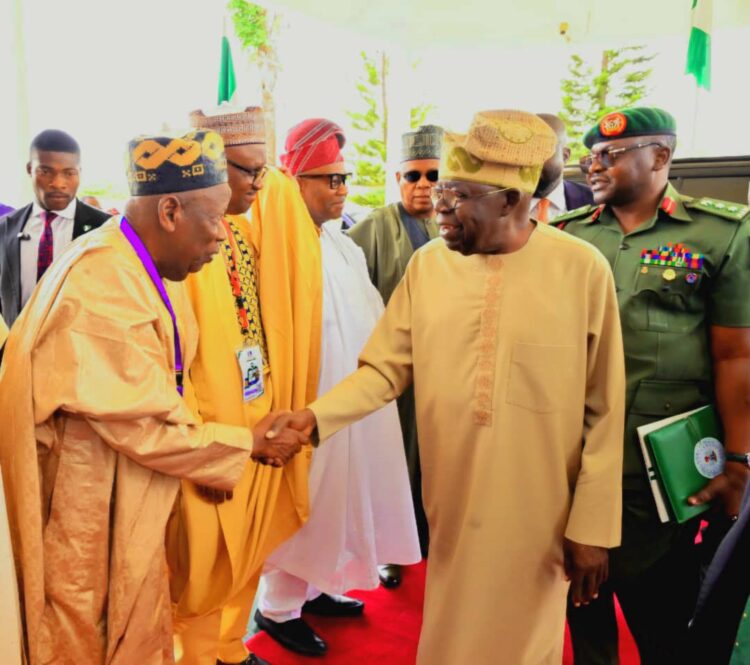
As the 2027 general elections loom on the horizon, President Bola Ahmed Tinubu finds himself at the center of Nigeria’s political discourse. With a tenure marked by sweeping reforms and high-stakes governance decisions, the race for a second term is shaping up to be both consequential and intensely competitive.
Since assuming office in 2023 amid widespread anticipation, President Tinubu has embarked on a series of bold economic reforms most notably the removal of fuel subsidies and the unification of the exchange rate.
These measures, praised by international financial institutions, were designed to stabilize Africa’s largest economy and attract long-term investment. Though the economic strain on ordinary Nigerians is undeniable, the measures are intended to bring long-term improvements.
READ ALSO: Ganduje Undertakes Hajj Pilgrimage Amid Strengthening APC Leadership
“We have chosen the harder right instead of the easier wrong,” Tinubu declared during a midterm economic review, defending his administration’s controversial policy direction.
APC Rallies Behind Its Candidate with Ganduje at the Helm
At the party level, President Tinubu’s influence within the All Progressives Congress (APC) remains strong, thanks largely to the strategic leadership of APC National Chairman, Dr. Abdullahi Umar Ganduje. The former two term Governor of Kano State has played a key role in building consensus within the party and unifying its various factions behind Tinubu’s candidacy.
Dr. Ganduje, known for his political pragmatism and grassroots appeal, has led a vigorous party-building effort across the country strengthening local structures and attracting key opposition figures to the APC.
“Our priority is unity and continuity,” Ganduje said during the party’s National Executive Council (NEC) meeting in Abuja. “President Tinubu is not just our candidate; he is the vision-bearer of our progressive movement.”
Under Ganduje’s leadership, the APC has formally endorsed President Tinubu for a second term. This endorsement is widely seen as a sign of internal strength and strategic readiness for the political battles ahead. Party insiders describe Ganduje’s leadership as inclusive and deliberate, with a focus on resolving internal conflicts and consolidating support across Nigeria’s six geopolitical zones.
Opposition in Disarray
Meanwhile, as the APC bolsters its campaign machinery, Nigeria’s major opposition parties like the People’s Democratic Party (PDP) and the Labour Party (LP) remain mired in internal conflict. Legal disputes, leadership struggles, and ideological divisions have severely hampered their ability to present a united and credible challenge to President Tinubu in 2027.
Political observers note that this state of disarray within the opposition gives President Tinubu a distinct advantage, enabling him to consolidate leadership without facing significant resistance from across the country.
Looking Ahead
As Nigeria charts its course toward 2027, the synergy between President Tinubu’s reformist vision and Dr. Ganduje’s strategic leadership is shaping a promising political trajectory. With ongoing economic initiatives, developmental projects across all six geopolitical zones, and a cohesive party structure, the groundwork is being laid for sustained progress and national stability. If this momentum continues, Nigeria could witness deeper democratic consolidation and renewed public confidence in leadership.
shuaibuumaridris@gmail.com