
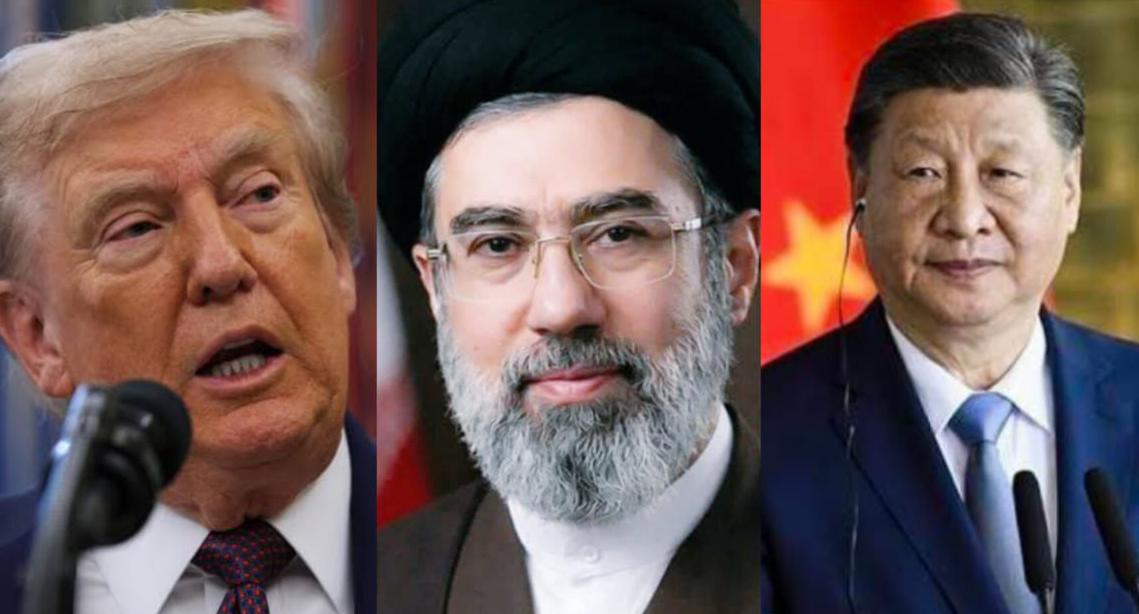
The recent visit of United States President Donald Trump to China has significantly altered the diplomatic landscape surrounding the Iran war, elevating Beijing into a central player in efforts to preserve the fragile ceasefire between United States and Iran.
Although the summit between Trump and Chinese President Xi Jinping did not produce a major breakthrough agreement, analysts say the meetings underscored China’s growing influence over the conflict and its potential role in preventing a wider Middle East war.
The Iran crisis dominated discussions during Trump’s high-profile Beijing visit, overshadowing issues such as trade, technology and Taiwan. Washington reportedly sought Beijing’s cooperation in persuading Tehran to maintain the ceasefire, reopen diplomatic channels and ensure stability around the strategically critical Strait of Hormuz.
The war has already imposed enormous global costs. Pentagon officials recently estimated that the conflict involving the United States, Israel and Iran has cost nearly $29 billion, while disruptions to Gulf shipping and energy infrastructure triggered what economists describe as a historic global energy shock.
China’s involvement has become increasingly important because Beijing remains one of Iran’s closest economic partners and one of the largest buyers of Iranian oil. American officials believe China possesses significant leverage capable of encouraging Tehran toward compromise and de-escalation.
However, despite US hopes for stronger Chinese pressure on Iran, Beijing appears unwilling to fully align itself with Washington’s confrontation strategy.
Chinese officials have repeatedly emphasized diplomacy, ceasefire preservation and regional stability rather than military escalation or coercive pressure. During and after the summit, Beijing stressed that continued war would damage global trade, disrupt oil supplies and threaten international economic stability.
Analysts say China’s position reflects its broader strategic interests in the Middle East. Beijing depends heavily on energy imports from the Gulf region and fears that prolonged conflict around the Strait of Hormuz could severely damage the Chinese economy and global markets.
At the same time, China maintains strong political and economic ties with Iran, including energy cooperation, infrastructure projects and long-term strategic agreements. Experts say these relationships make it unlikely that Beijing would support any effort aimed at forcing Tehran to fully surrender to American demands.
Instead, China is believed to be encouraging a negotiated settlement that protects regional stability while preventing total collapse of the ceasefire.
Observers note that the summit revealed significant differences between Washington and Beijing over how to handle Iran. While the United States continues to apply military and diplomatic pressure, China favors dialogue, gradual compromise and multilateral negotiations.
Despite those differences, both countries reportedly agreed on key objectives, including preventing wider regional war and keeping international shipping lanes open.
The diplomatic importance of Trump’s China visit comes as the ceasefire itself faces mounting strain. Iran has accused the United States of violating the truce through military operations near the Strait of Hormuz, while Trump recently described the agreement as being on “massive life support.”
Regional tensions have also intensified following reports of explosions and drone interceptions near Bandar Abbas and Qeshm Island, areas hosting critical Iranian military and energy infrastructure.
Analysts say the evolving situation demonstrates how the Iran war is no longer only a regional confrontation but part of a wider geopolitical struggle involving global powers, energy security and economic influence.
For now, China appears determined to avoid choosing sides completely. Instead, Beijing is positioning itself as both a strategic partner of Iran and a diplomatic power capable of communicating with Washington.
Whether that balancing strategy can help preserve the ceasefire remains uncertain. But Trump’s Beijing visit has clearly transformed China from a distant observer into one of the most important actors shaping the future of the Iran conflict and broader Middle East stability.