
By Sani Magaji Garko
The death of veteran United States Senator Lindsey Graham has sent shockwaves through American politics, bringing to an end the career of one of President Donald Trump’s closest allies, one of the Republican Party’s most influential conservative voices and one of Washington’s leading advocates of a hardline foreign policy.
Graham, who served South Carolina in the US Senate for more than two decades, reportedly died at the age of 71 after a brief and sudden illness, ending a political career that helped shape America’s domestic and international policies through successive administrations.
His death comes at a time of heightened global tensions, with conflicts continuing in the Middle East, Eastern Europe and other strategic regions where Graham consistently argued that the United States should project military strength, support its allies and confront its adversaries without hesitation.
READ ALSO: Father Emir, Architect of Modern Qatar, Founder of Al Jazeera Media Network Dies in Doha
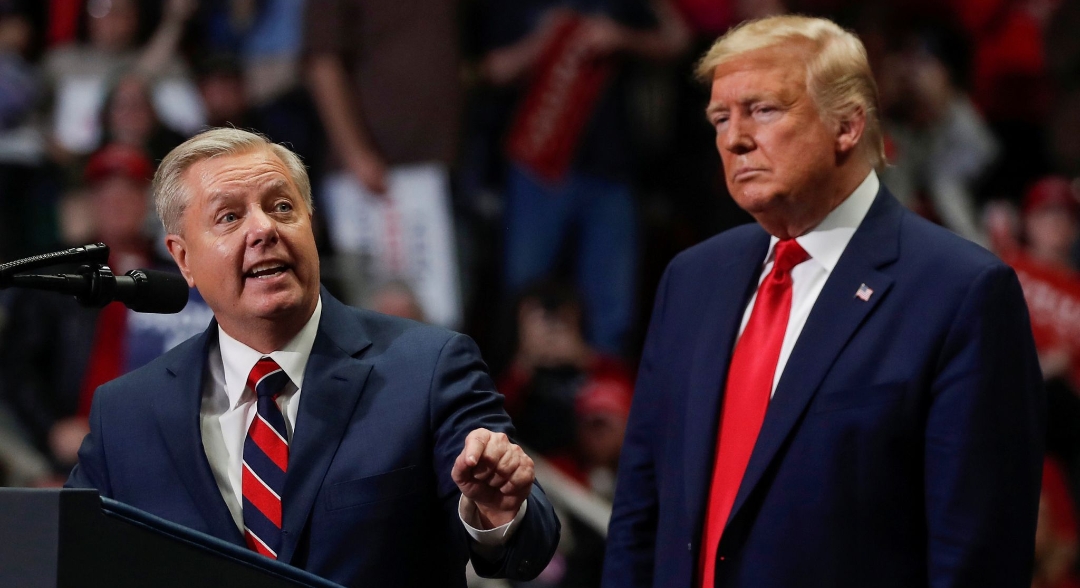
President Trump led tributes to his longtime ally, describing Graham as “a true American patriot” and praising his unwavering commitment to the nation and the Republican Party.
Although Graham fiercely criticized Trump during the 2016 Republican presidential campaign, their relationship transformed after Trump’s election into one of the strongest political partnerships in Washington.
Over the years, Graham emerged as one of Trump’s most dependable defenders, standing firmly beside the president during impeachment battles, election disputes and major national security decisions.
His loyalty earned him a place among the inner circle of Republican leaders shaping the administration’s policies on defence, immigration, judicial appointments and foreign affairs.
Known as one of Capitol Hill’s most outspoken foreign policy hawks, Graham consistently advocated a muscular American role in global affairs.
He championed increased military spending, backed stronger sanctions against Iran, supported extensive military assistance to Ukraine and remained one of the strongest congressional supporters of Israel.
Throughout the recent US — Iran conflict, Graham repeatedly defended Washington’s military posture, arguing that Iran’s nuclear ambitions and regional influence posed serious threats to American interests and Middle East stability
His uncompromising positions made him a respected figure among conservatives and national security experts, while critics accused him of favouring military intervention over diplomatic engagement.
Beyond foreign policy, Graham played a defining role in reshaping America’s judiciary.
As chairman of the Senate Judiciary Committee during Trump’s presidency, he oversaw confirmation hearings for numerous conservative federal judges and helped secure appointments that significantly shifted the ideological balance of the U.S. Supreme Court.
His influence extended across defence policy, intelligence oversight, immigration reform and constitutional issues, making him one of the Republican Party’s most powerful lawmakers.
Political observers say Graham’s death leaves a major leadership vacuum within the Republican Party, particularly among lawmakers advocating strong national defence, close cooperation with traditional allies and an assertive American presence on the global stage.
His passing is also expected to have political implications in the Senate, where Republicans hold a narrow majority and a replacement process is expected to begin under South Carolina law.
Tributes have continued to pour in from lawmakers, diplomats and international leaders, many describing Graham as a determined public servant whose influence reached far beyond the United States.
Supporters remembered him as a fearless defender of American interests, while opponents acknowledged that, despite sharp disagreements over his policies, he remained one of the most consequential voices in U.S. national security and foreign affairs.
With his death, the United States loses one of the defining architects of modern Republican foreign policy—a politician whose alliance with President Trump and unwavering belief in American military strength shaped some of the most consequential debates of the past two decades.