
The Kano State Executive Council has approved projects and programmes worth ₦55.48 billion, with education receiving the largest share of the spending as the government intensifies efforts to improve infrastructure, healthcare, road networks, water supply and rural development across the state.
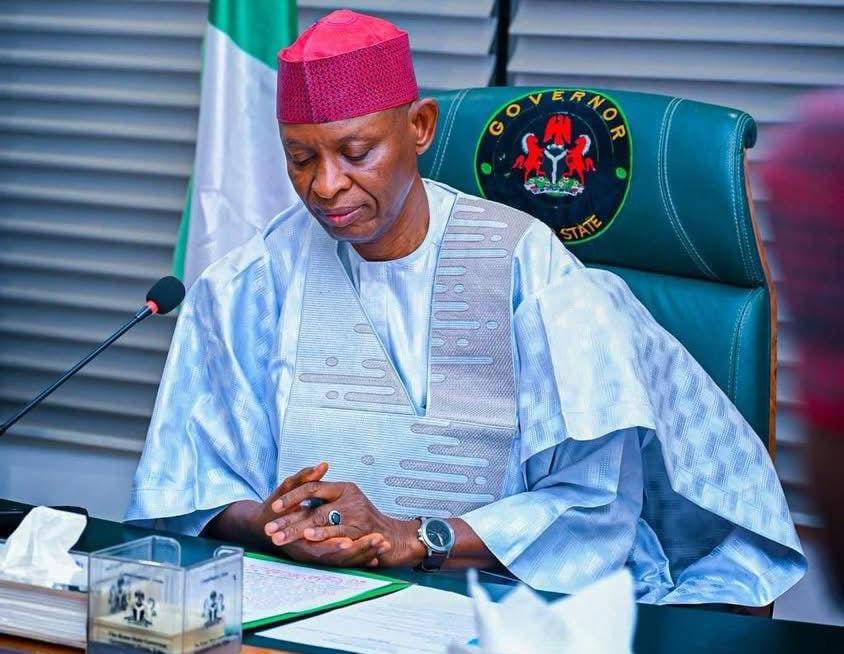
The approvals were made during the 40th Executive Council Meeting presided over by Governor Abba Kabir Yusuf at the Council Chamber, Government House, Kano.
Briefing journalists after the meeting, the Commissioner for Information and Internal Affairs, Comrade Ibrahim Abdullahi Waiya, said the Council approved a total expenditure of ₦55,475,406,487.82 for strategic projects designed to accelerate socio-economic development and improve the welfare of residents.
According to him, the approvals reflect the administration’s commitment to strengthening education, healthcare, road infrastructure, water supply, environmental sanitation, housing, rural development and public service delivery.
Education Takes the Largest Share
Education emerged as the biggest beneficiary, with the Council approving more than 30 projects involving the renovation and construction of schools, provision of classrooms, libraries, ICT centres, staff quarters, perimeter fencing, furniture and solar power installations across the state.
Among the major approvals were the rehabilitation of Sani Bello Science College, Dawakin Kudu at over ₦1.02 billion, rehabilitation of Science Secondary School, Dawakin Tofa worth ₦896.3 million, settlement of outstanding boarding school feeding bills amounting to ₦816.2 million, establishment of the Maryam Abba Yusuf Modern Learning Centre at Rijiyar Gwangwan, rehabilitation of 31 buses under the Girls Child Education Initiative, and procurement of educational materials for special education schools.
Major Investments in Healthcare
The Council also approved several healthcare projects aimed at expanding access to quality medical services.
These include the reconstruction and upgrading of primary healthcare centres in Kumbotso, Kiru, Dukawa, Gano, Warawa, Gwale and Nassarawa, procurement of medical equipment for Garun Malam General Hospital, Ghari General Hospital, and the Kano State Comprehensive Sickle Cell Treatment Centre at Murtala Muhammad Specialist Hospital.
Billions for Roads and Infrastructure
Road construction and infrastructure development also received significant attention.
Among the key approvals were:
Construction of the Ungogo–Minjibir Road valued at ₦10.47 billion.
Construction of the Kofar Waika–Turba–Gidan Siminti–Dorawar Dillalai Road traversing Gwale, Dala and Ungogo Local Government Areas at ₦3.67 billion.
Reconstruction of roads around Singer Market at ₦3.09 billion.
Reconstruction of Ali Yakasai and Tukur Roads in Nassarawa Local Government Area.
Installation of solar-powered street lights on major roads.
Completion of the New Kano State House of Assembly Office Complex and other public infrastructure.
Compensation for Road Projects
Under the Ministry of Land and Physical Planning, the Council approved over ₦6.5 billion as compensation to property owners affected by major road projects.
The beneficiaries include owners of 361 properties affected by the Kano Northern Bypass Road, 1,113 properties along the Gaya Dualised Road Project, and those impacted by the Kano–Dawakin Tofa–Gwarzo–Dayi Dualisation Project.
The Council also approved the purchase of a property at Kofar Nassarawa for conversion into an Islamiyya school for girls and women.
Water Supply, Environment and Flood Control
To improve water supply and environmental sanitation, the Council approved over ₦7 billion for the supply of diesel to water works, payment of electricity bills, annual desilting of drainage channels, cemetery intervention works, beautification of parks and construction of drainage systems across Gwale Local Government Area.
Housing and Rural Development
The Executive Council further approved the construction of perimeter fences and security gates at Kwankwasiyya City and Amana City, as well as the release of ₦1.169 billion as counterpart funding for the Rural Access and Agricultural Marketing Project (RAAMP).
It also approved the implementation of a Five-Year Kano Integrated Rural and Sustainable Community Development Framework.
Information Ministry Gets Broadcasting Equipment
The Council approved the procurement of modern broadcasting equipment for the Kano State Broadcasting Corporation, renovation of the office of the Commissioner for Information and Internal Affairs, and a two-day capacity-building workshop for public information officers across Ministries, Departments and Agencies.
Health Bills Head to Assembly
Beyond project approvals, the Executive Council approved the transmission of several health-related bills to the Kano State House of Assembly.
The proposed legislation includes the review of the Kano State Primary Health Care Management Board Law, the establishment of colleges of health sciences through the upgrading of health institutions in Kano and Bebeji, and the review of the Kano State Drugs and Medical Consumables Supply Agency Bill.
Council Bans ‘Daba’
The Council also declared the practice popularly known as “Daba” a deviant and unacceptable social act, directing security agencies and relevant government institutions to intensify enforcement against the practice.
It equally approved Kano State’s participation in the NG-CARES 2.0 Additional Financing Programme, aimed at expanding social protection initiatives, supporting vulnerable households and stimulating economic recovery.
Hajj, Halal Economy Receive Attention
Council members received a report on the successful conduct of the 2026 Hajj exercise, commending the welfare and safe transportation of Kano pilgrims.
They also received a presentation on the US$7.7 trillion Global Halal Economy, highlighting opportunities for Kano State to become a leading hub for Halal products and services.
Presentations were equally made on the Kano State Master Plan and achievements recorded in the revitalisation of regional water supply schemes.
Governor Receives Multiple Awards
During the meeting, Governor Abba Kabir Yusuf received several awards and recognitions from professional bodies, civil society organisations, youth groups, health institutions and media organisations in recognition of his administration’s performance in education, infrastructure, healthcare and public service.
Among the organisations that honoured the Governor were the Administrative Staff College of Nigeria (ASCON), the Computer Society of Nigeria, the Sickle Cell Foundation of Nigeria, the Association of Industrial Pharmacists of Nigeria, the Institute of Chartered Secretaries and Administrators of Nigeria, the Kano State Online Media Chapel, and several other professional and community organisations.
Speaking on the outcome of the meeting, Waiya said the decisions taken by the Executive Council underscore Governor Yusuf’s determination to deliver sustainable development and improve the quality of life of the people of Kano State through strategic investments in critical sectors.