
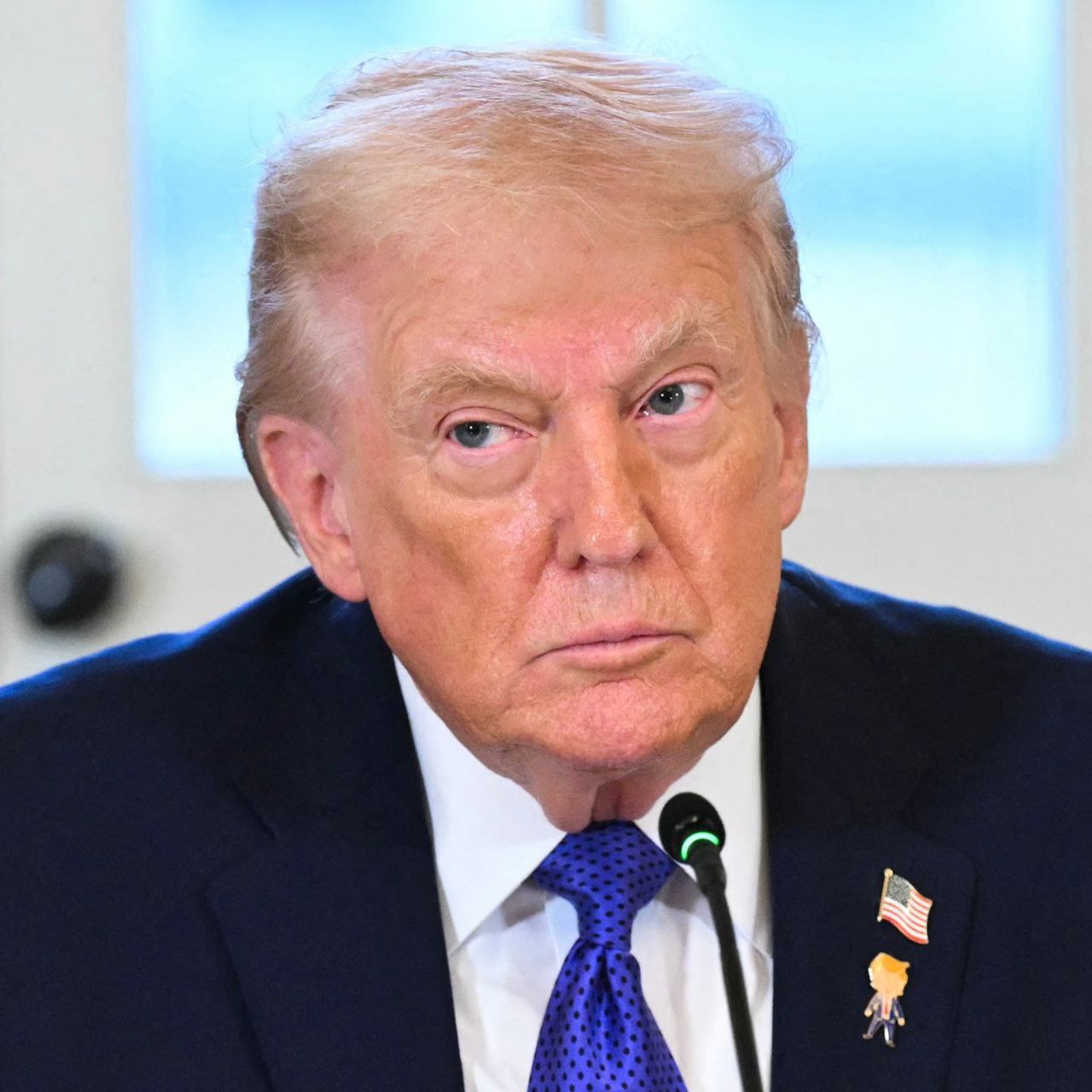
The United States President Donald Trump has announced a new security agreement with Denmark and Greenland aimed at expanding the American military presence in the Arctic territory, while separately ordering a ban on three major media organisations — CNN, MS NOW and Politico — from the White House.
The two developments, announced on Friday, September 18, 2026, have generated fresh international attention over US security policy, relations with European allies and press freedom.
Trump said the emerging Greenland agreement gives the United States “permanent control” over the island’s security and would allow Washington to begin developing a larger military presence there.
READ ALSO: How Russia is Capitalizing on NATO’s Divisions Amid Trump’s Greenland Takeover
READ ALSO: BREAKING: Trump Orders Military to Draft Greenland Invasion Plans
However, Denmark and Greenland stressed that the agreement recognises Danish sovereignty and Greenland’s territorial integrity and right to self-determination. The three governments are expected to formally sign the agreement during the United Nations General Assembly next week, after which it will require the necessary parliamentary procedures before taking effect.
Under the arrangement, the United States would strengthen its military presence in Greenland, while Russia, China and other non-NATO adversaries would be prevented from establishing military bases or making sensitive strategic investments on the island without US approval.
US Secretary of State Marco Rubio described the arrangement as a major national-security achievement, saying Greenland would remain within the strategic defence area of North America.
Greenland, located between the Arctic and North Atlantic, is strategically important to the defence of North America and Europe. The United States already operates Pituffik Space Base there, supporting missile-warning, missile-defence and space-surveillance operations.
The agreement follows months of tension after Trump repeatedly demanded greater US control over Greenland and previously refused to rule out using force to acquire the Danish territory. Denmark and Greenland had consistently rejected any proposal to sell or surrender the island.
The new arrangement therefore falls short of an American takeover of Greenland, with Danish and Greenlandic authorities maintaining that their sovereignty remains intact.
Trump Bans Three Media Organisations
Hours after announcing the Greenland agreement, Trump announced that CNN, MS NOW and Politico would be barred from the White House, accusing the organisations of repeatedly publishing what he called “fake news.”
Trump said the decision was based on what he described as a cumulative pattern of coverage rather than a single report or incident.
He also warned that other media organisations could face similar restrictions, mentioning The New York Times and The Washington Post when questioned by reporters.
The precise scope of the ban was initially unclear. Reporters from the three organisations were still working at the White House after Trump’s announcement, while the administration was expected to inform them that access to the White House grounds would end.
CNN said it stood behind its White House reporting team and argued that the US Constitution protects its right to report without government interference.
Politico likewise said it would continue reporting on the administration and would defend its First Amendment rights.
The announcement immediately raised questions over the constitutional limits of presidential control over White House press access.
Legal experts have noted that presidents have considerable discretion over access to particular events and limited press pools, but broader exclusion from generally available White House press facilities could face significant First Amendment and due-process challenges.
Trump’s decision also comes ahead of the November 3 US midterm elections, adding further political sensitivity to the administration’s confrontation with major news organisations.
The Greenland agreement and the media restrictions together mark two significant developments in Trump’s second-term presidency — one involving America’s strategic relationship with a NATO ally and the Arctic, and the other involving the administration’s increasingly contentious relationship with the American news media.
While Denmark and Greenland have welcomed the security agreement as strengthening Arctic and North Atlantic security, the media ban is likely to face legal and press-freedom challenges as its full scope becomes clearer.