
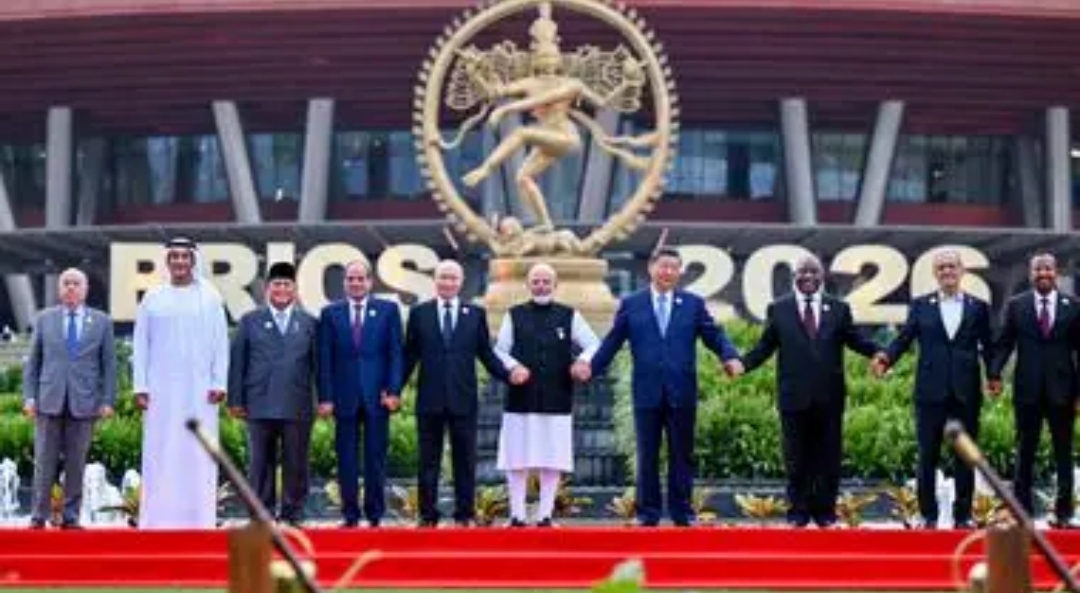
BRICS leaders have called for reforms of the United Nations, International Monetary Fund (IMF) and World Bank to give developing countries greater representation in global decision-making, while pushing for increased use of national currencies in international trade.
The resolutions were adopted at the 18th BRICS Summit in New Delhi, India, held from September 12 to 13, 2026.
In the New Delhi Declaration, BRICS backed a more representative global governance system and renewed calls for reform of the UN Security Council and the governance structures of the IMF and World Bank.
READ ALSO: OPINION: BRICS, US Deny and Decline America’s Unipolar Global Order — Nasiru Waziri
The bloc also supported stronger cooperation on cross-border payments and greater use of local currencies for trade and investment, although it did not establish a common BRICS currency.
The move is aimed at reducing excessive dependence on the US dollar and shielding developing economies from currency volatility, sanctions and disruptions in international financial markets.
For Nigeria and Africa, the reforms could strengthen their voice in institutions that determine global security, development financing and economic policies.
Greater local-currency settlement could also reduce some foreign-exchange pressures and transaction costs in trade with BRICS partners, while complementing African efforts to strengthen regional payment systems and intra-African trade.
The summit further backed greater use of the BRICS New Development Bank for infrastructure and sustainable-development projects, creating potential opportunities for Nigeria in power, transport, agriculture, water and digital infrastructure.
BRICS leaders also discussed artificial intelligence, food and energy security, critical minerals, healthcare, climate change and sustainable development.
For Africa, the grouping’s focus on critical minerals presents an opportunity to attract investment into mining and local processing, while cooperation in agriculture, health and technology could support development.
The summit was held amid growing geopolitical tensions, wars, sanctions and disruptions to global trade and supply chains.
BRICS therefore reaffirmed its broader ambition to strengthen the influence of the Global South and promote a more multipolar international system.
For Nigeria, the key challenge now is to translate its BRICS partnership into concrete benefits through increased investment, technology transfer, development financing, market access and stronger economic cooperation.