
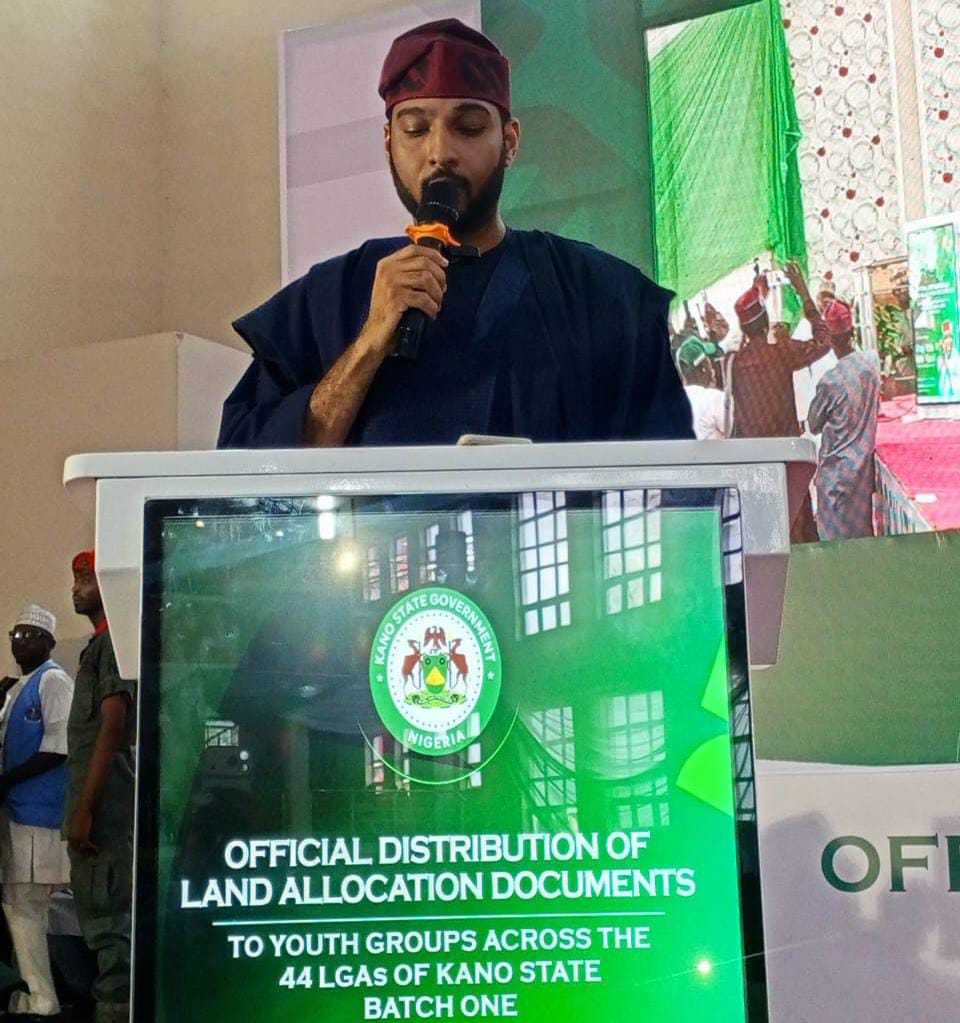
The Kano State Government has allocated plots of land to 1,000 youth groups drawn from the 44 local government areas of the state as part of efforts to empower young people and provide them with opportunities for sustainable socio-economic development.
The allocation, approved by Governor Abba Kabir Yusuf, was described by beneficiaries as a landmark initiative capable of giving youths greater access to land and supporting their aspirations for economic independence.
The beneficiaries received allocation documents covering plots located within professionally planned areas designed to provide the basic facilities required for the development of functional communities.
READ ALSO: Islamic Scholar Declares Kano Widow Marriage Programme ‘Haram’, Urges Government to Stop It
The Commissioner for Land and Physical Planning, Abduljabbar Muhammad Umar Garko, said the land allocated to the youths was not ordinary plots, stressing that the areas had been professionally designed with provisions for essential infrastructure and community facilities.
According to him, the planned layouts include provisions for mosques, schools, security facilities and properly designed road networks.
Garko said the approach was intended to ensure that beneficiaries did not merely acquire land but obtained access to plots within properly planned communities capable of supporting sustainable development.
The distribution of the allocation documents to youth groups representing all 44 local government areas was described by beneficiaries as “one of its kind”, with some of them expressing appreciation to the state government for creating an opportunity for young people to secure land through a formal government process.
The initiative comes amid the administration’s broader efforts to reform land administration in Kano State, modernise the Kano Geographic Information System (KANGIS) and make land acquisition more transparent, secure and digitally driven.
The state government has in recent months intensified its campaign against land grabbing, fraudulent land transactions and illegal development, with the Ministry of Land and Physical Planning repeatedly urging residents and prospective land buyers to verify ownership and allocation documents before purchasing or developing plots.
Speaking at the allocation exercise, Governor Yusuf, represented by the Secretary to the State Government, Alhaji Faruk Umar Ibrahim, assured residents that his administration would continue to introduce and implement policies and programmes aimed at improving the lives of the people.
The governor said the government remained committed to people-centred development and initiatives capable of creating opportunities for residents, particularly young people.
He said the administration would continue to formulate policies designed to address the socio-economic needs of the population and improve their overall wellbeing.
The land allocation is therefore being positioned as part of the administration’s wider development agenda, which includes youth empowerment, improved land administration and the provision of infrastructure to support economic activities.
Commissioner Garko said the government was determined to ensure that public land was properly managed and allocated in accordance with approved plans and relevant laws.
He stressed the importance of proper documentation and verification, particularly against the activities of land grabbers and individuals involved in the illegal sale of government-owned plots.
The commissioner has previously warned members of the public, particularly business communities and prospective property owners, to verify land documents with the Ministry of Land and Physical Planning and relevant government agencies before entering into transactions.
The warning is significant against the backdrop of the state government’s ongoing campaign against illegal land acquisition and development.
The government has also moved to protect land belonging to critical public institutions, including schools and hospitals, with the Ministry announcing measures to revoke allocations made on premises or demarcated areas belonging to such institutions.
The reforms are expected to complement the modernisation of KANGIS and the government’s drive towards a more secure and transparent land administration system.
For the 1,000 youth groups, however, the immediate significance of the latest allocation is access to formally documented land within planned layouts.
Beneficiaries described the initiative as an important intervention that could provide young people with a foundation for future investments and development.
The government is expected to maintain its emphasis on planned development and documentation as the beneficiaries proceed with the development of their respective plots.
The allocation also highlights the potential role of properly managed public land in supporting youth empowerment, community development and long-term urban planning across Kano State.
With 1,000 youth groups drawn from all 44 local government areas benefiting from the exercise, the initiative represents one of the administration’s latest attempts to link land administration with broader social and economic empowerment policies.
The state government’s challenge now will be to ensure that the beneficiaries can develop their plots in accordance with approved plans, while preventing the emergence of land speculation, illegal resale, encroachment and other practices that have historically complicated land administration in the state.