
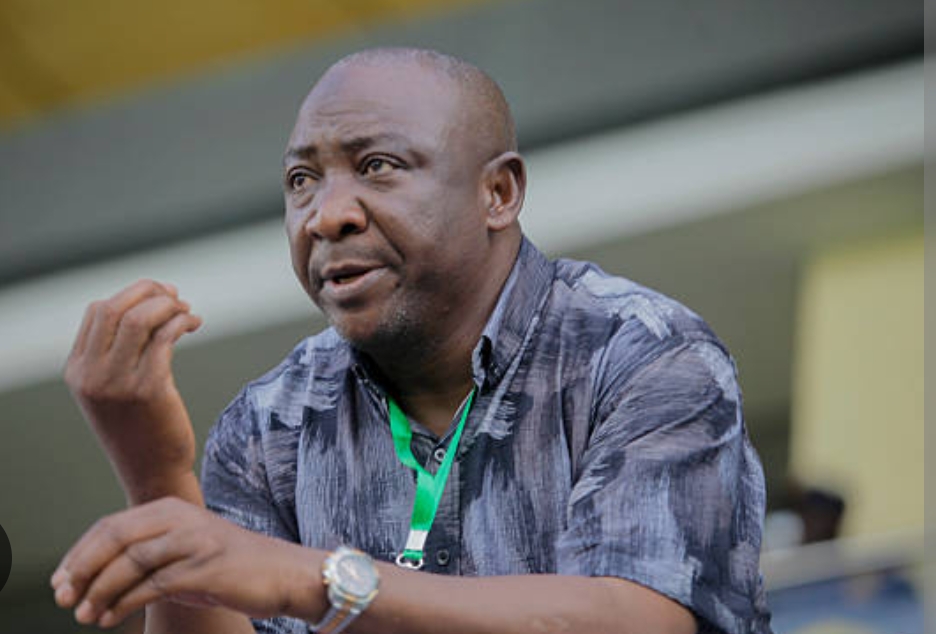
The President of the Nigeria Football Federation (NFF), Ibrahim Musa Gusau, has resigned from office amid a deepening crisis in Nigerian football following a series of disappointing performances and major qualification setbacks involving the country’s national teams.
Gusau announced his resignation in Abuja on Thursday, bringing an abrupt end to his tenure at a time when the NFF is facing mounting pressure from football stakeholders over the direction of the country’s football administration.
His resignation has also been accompanied by the departure of several members of the NFF Executive Committee, further deepening uncertainty over the leadership and future administration of Nigerian football.
READ ALSO: Kano Spends N26.5bn On Govt House, Governor’s Office, Travels In Six Months
The development comes after Nigeria suffered a number of setbacks, most notably the failure of the Super Eagles to qualify for the 2026 FIFA World Cup and the historic failure of the Super Falcons to secure a place at the 2027 FIFA Women’s World Cup.
The Super Eagles missed the 2026 World Cup after losing to the Democratic Republic of Congo in the African qualifying play-off, meaning Nigeria failed to reach the tournament for a second consecutive edition.
The setback was followed by an even more damaging blow to the country’s women’s football.
The Super Falcons failed to qualify for the 2027 Women’s World Cup, ending Nigeria’s long-standing record of appearing at every edition of the competition since its inception in 1991.
The Falcons’ failure triggered widespread criticism of the NFF and renewed calls for accountability and reforms in the administration of Nigerian football.
The worsening fortunes of the national teams have raised questions about player selection, coaching, preparation, funding and the overall management of Nigeria’s football development programmes.
Financial Questions
Gusau’s resignation also comes amid scrutiny of the management of a N17 billion Federal Government intervention fund reportedly released to address outstanding financial obligations to national-team players and officials.
Security agencies, including the Department of State Services (DSS), have reportedly sought documents relating to the utilisation of the funds.
However, the reported scrutiny does not by itself establish wrongdoing by Gusau or any NFF official, and the allegations remain subject to investigation.
The financial questions have nevertheless added to the pressure facing the federation and further complicated an already difficult situation.
NFF Board Crisis
The leadership crisis has reportedly spread beyond the federation’s president, with several members of the NFF Executive Committee also resigning.
Reports indicate that as many as eight of the 13 members of the Executive Committee have stepped down, raising concerns about the ability of the existing structure to continue functioning effectively.
The NFF is expected to hold an emergency Congress to consider the implications of the resignations and determine the next steps for the administration of the federation.
The crisis could also affect preparations for the planned NFF elective congress, where a new leadership is expected to emerge.
Calls For Reform
Gusau’s departure has intensified calls for a comprehensive review of the administration of Nigerian football.
Football stakeholders have increasingly demanded greater transparency in the management of the federation, improved financial accountability, better planning for national teams and stronger investment in grassroots and youth development.
The concerns extend beyond the Super Eagles and Super Falcons, with questions also being raised about the performance and development of Nigeria’s other national teams.
For supporters, the latest crisis represents more than a leadership change. It has exposed deeper concerns about the structure and management of Nigerian football.
A Difficult Legacy
Gusau became NFF president in September 2022, succeeding Amaju Pinnick, with a mandate to lead Nigerian football through a period of rebuilding and renewed international success.
His tenure, however, has ended against the backdrop of Nigeria’s failure to qualify for two major World Cups involving the country’s senior men’s and women’s teams.
The Super Eagles’ absence from the 2026 World Cup and the Super Falcons’ historic failure to qualify for the 2027 women’s tournament have become defining setbacks for the federation.
With Gusau now out of office and several board members reportedly following him, the immediate task before Nigerian football authorities is to restore stability and prepare the ground for a new leadership.
The next administration will inherit the responsibility of rebuilding confidence among players, coaches, supporters and other stakeholders while addressing the structural problems that have contributed to Nigeria’s recent decline.
For a country with a rich football tradition and a long history of success at continental and global youth competitions, Gusau’s resignation marks another major turning point — and a test of whether the current crisis can become the beginning of meaningful reform in Nigerian football.