
A new outbreak of the deadly Ebola virus is threatening communities in northeastern Democratic Republic of the Congo (DRC), further straining an already fragile health system battered by insecurity, displacement, and years of armed conflict.
Francine Kongolo, ICRC Kinshasa delegation in a statement sent to GLOBAL TRACKER said the outbreak was officially declared on May 15, 2026, and has already affected several health zones in Ituri Province, a region grappling with persistent violence and humanitarian challenges.
Health authorities, supported by the Red Cross Society of the Democratic Republic of the Congo (CRRDC), the International Federation of Red Cross and Red Crescent Societies (IFRC), and the International Committee of the Red Cross (ICRC), have launched an emergency response to contain what is now the country’s 17th Ebola epidemic.
Seven Health Zones Affected
The epidemic has spread across seven health zones, including Bunia, where Red Cross volunteers are working around the clock to prevent further transmission of the highly contagious virus.
The outbreak comes at a particularly difficult time for the province’s healthcare system, which is struggling with shortages of medical personnel, limited supplies, logistical challenges, and continuing insecurity caused by armed violence.
Humanitarian agencies warn that these factors could complicate efforts to quickly contain the disease.
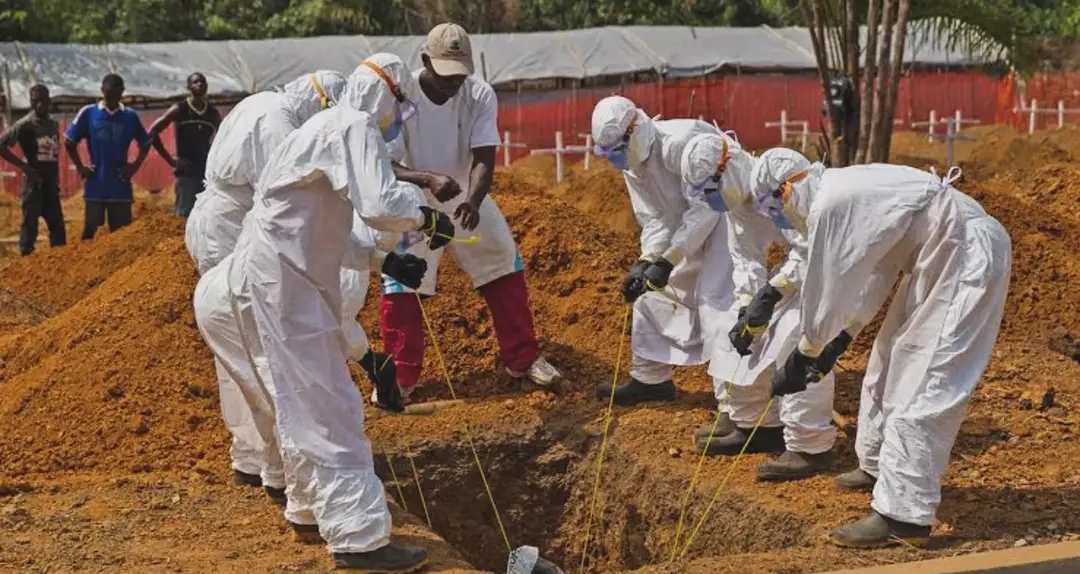
One of the most critical elements of the response has been the deployment of specially trained Red Cross volunteers to conduct safe and dignified burials, a key measure in preventing Ebola transmission.
Recently, CRRDC teams buried two deceased persons suspected of having contracted Ebola.
Wearing full personal protective equipment and utilizing specialized disinfection equipment, volunteers followed strict procedures designed to protect families and communities while preserving the dignity of the deceased.
“The first thing we do is to take a sample from the deceased person in the form of an oral swab. Then we stabilize the body and place it first in a body bag, then in a coffin. The team then transports the coffin to the place of burial,” explained Raphael Olangi, head of the CRRDC’s Dignified and Safe Burial Team.
Health experts say safe burials remain one of the most effective ways to stop Ebola from spreading during outbreaks.
Volunteers Combat Fear and Misinformation
Beyond burial operations, Red Cross volunteers are also working to educate communities about the virus.
At a displaced persons site in Kigonze, near Bunia, teams have been conducting awareness sessions on:
- How Ebola is transmitted;
- Preventive health measures;
- The importance of reporting suspected cases promptly;
- Community cooperation with health authorities.
The effort is particularly important in areas affected by armed conflict, displacement, and population movements, where misinformation can spread rapidly.
“Community communication remains the most effective weapon to stop the spread of this 17th epidemic,” said Delphin Chanamula, a Red Cross volunteer.
“The community understands that the Red Cross is there, with volunteers trained to bury bodies correctly. There is good acceptance in the community, although there is some resistance from a few people because of certain beliefs and emotional attachment to the deceased.”
Conflict and Displacement Complicate Containment Efforts
The Ebola outbreak is unfolding in a region already facing multiple humanitarian crises.
Large-scale displacement, armed conflict, and insecurity continue to force families to move frequently, making disease surveillance and contact tracing more difficult.
Humanitarian workers say that fear, rumors, and disinformation remain among the biggest obstacles to containing the virus.
To address these challenges, CRRDC volunteers, with support from the IFRC and ICRC, have intensified:
- Community engagement activities;
- Infection prevention and control measures;
- Psychosocial support services;
- Awareness campaigns targeting vulnerable populations.
- A Race Against Time
Health officials warn that swift action will be critical to preventing the outbreak from spreading further across Ituri Province and beyond.
The Red Cross Movement says trained volunteers remain on the frontlines, conducting burials, educating communities, and supporting affected families despite the difficult operating environment.
As the Democratic Republic of the Congo battles yet another Ebola outbreak amid ongoing insecurity, humanitarian agencies are urging communities to cooperate with health measures and report suspected cases promptly.
For now, the fight against Ebola in Ituri is not only a medical emergency but also a test of resilience for communities already scarred by years of conflict and displacement.