
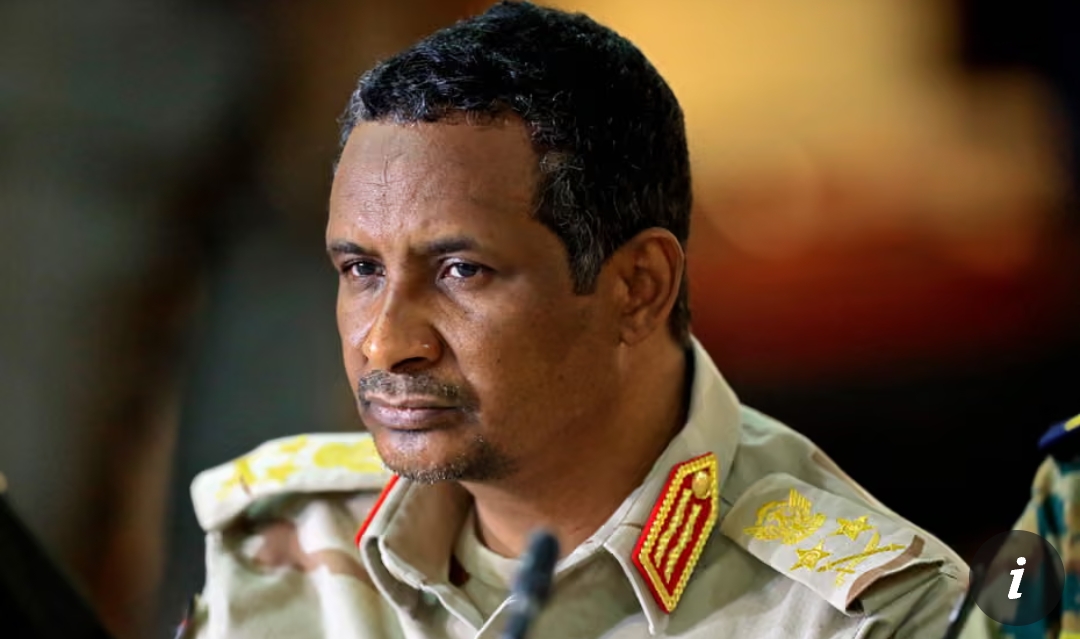
A growing number of senior commanders, officers and hundreds of fighters have defected from Sudan’s paramilitary Rapid Support Forces (RSF) to join the Sudanese Armed Forces (SAF), in developments highlighting deepening internal divisions within the force led by Mohamed Hamdan Dagalo, popularly known as Hemedti.
The latest reported defection occurred on October 30, 2026, when senior RSF commander Siddiq Ander announced that he had abandoned the paramilitary organisation.
Al Jazeera reported that he made the announcement in a video obtained by the broadcaster, although details of the number of fighters accompanying him were not provided.
READ ALSO: Kano Governor Reshuffles Cabinet, Removes Waiya From Information Ministry
His announcement followed the October 24 defection of Lieutenant Colonel Jiddo Mohammed Adam Mohammed, identified as commander of RSF Group 135 and the Nyala South sector in South Darfur.
He reportedly expressed regret over his involvement in the conflict, apologized to affected civilians and urged other fighters to leave the RSF.
Earlier, on October 8, Lieutenant Colonel Mohammed Azraq al-Fanjari, commander of the RSF Special Tasks Group, defected alongside approximately 300 officers and soldiers, bringing about 30 combat vehicles.
He cited the devastating consequences of the war and called on other fighters to abandon the conflict.
On September 25, another commander, Al-Tayeb Mohammed Ahmed, popularly known as Al-Tayeb al-Wahidu, reportedly defected with approximately 50 fighters and five armed vehicles in Omdurman, attributing his decision to what he described as growing tragedies within the RSF.
On August 31, Abubakr Hamouda Dahloub, identified as the RSF intelligence chief in North Kordofan, reportedly joined the army with approximately 200 fighters, weapons and military vehicles.
Earlier, on August 19, Sudanese authorities announced that 318 RSF personnel, including four commanders, had defected with about 50 combat vehicles, while on August 13, another 21 commanders and 270 fighters reportedly surrendered with 37 vehicles.
One of the most prominent departures occurred in April 2026, when Major General Al-Nour Ahmed Adam, popularly known as Al-Nour al-Gubba, abandoned the RSF and joined the Sudanese army with fighters and military equipment.
Reports linked his decision partly to disagreements over military appointments and command positions following the RSF capture of El Fasher in October 2025. Other reported departures included Brigadier General Ali Rizqallah, popularly known as Al-Savana, and political adviser Fares al-Nour.
The defections have been attributed to several factors, including disagreements over Hemedti’s leadership, disputes surrounding military appointments, tribal tensions, financial incentives, battlefield pressure and growing dissatisfaction with the direction of the war.
Leadership disagreements appear to be a significant factor, with some commanders reportedly unhappy over the distribution of authority, resources and senior military positions. The departure of Al-Nour al-Gubba, for instance, was linked to his reported disagreement with the RSF leadership over a command appointment in North Darfur.
Tribal divisions have also contributed to the internal tensions. The RSF draws substantial support from Arab communities in Darfur, particularly sections of the Rizeigat tribal confederation.
However, tensions between different clans have intensified, particularly following the RSF attack on Mustariha, associated with tribal leader Musa Hilal and the Mahamid clan, which reportedly deepened resentment among some commanders and fighters.
Financial incentives and military intelligence operations have also played a role. Reports indicate that the Sudanese army has been contacting RSF commanders and encouraging them to defect through offers of financial incentives and opportunities to surrender. The army has also sought to exploit disagreements within the paramilitary organisation to strengthen its own position.
The prolonged conflict, heavy casualties and deteriorating humanitarian situation have further influenced some defections. Several commanders have publicly expressed dissatisfaction with the consequences of the war, including civilian suffering, displacement and destruction. Al-Fanjari, for example, said his decision followed reflection on the devastating impact of the conflict.
The growing departures could have significant military implications for Hemedti, particularly as experienced commanders leave with fighters, weapons, combat vehicles and knowledge of RSF operations. For the Sudanese army, the arrivals could provide additional manpower, intelligence advantages and opportunities to weaken the opposing force’s command structure.
However, the defections do not necessarily mean that the RSF is collapsing. The paramilitary organisation continues to maintain substantial territorial influence, particularly in Darfur, and remains capable of conducting military operations. Human rights advocates have also warned that commanders accused of serious abuses must not escape accountability simply because they have switched sides.
Sudan’s war began on April 15, 2023, following a power struggle between the Sudanese Armed Forces and the RSF over military integration and control of the country’s political transition. Despite international mediation involving the United States, Saudi Arabia, Egypt and the United Arab Emirates, a lasting ceasefire remains elusive, while millions of civilians continue to face displacement, hunger and insecurity.
The latest wave of defections raises questions about the future cohesion of the RSF and whether more senior commanders and entire military units will abandon Hemedti. If the trend continues, it could affect the organisation’s recruitment, command structure, battlefield operations and political influence, although its ultimate impact will depend on the scale of future departures and the army’s ability to integrate former RSF personnel.