
By; Sufyan Lawal Kabo (Sefjamil)
sefjamil3@gmail.com
Some governments build roads, renovate schools and commission projects. Others go beyond physical development to rebuild public confidence, restore institutional trust and reconnect governance with ordinary citizens.
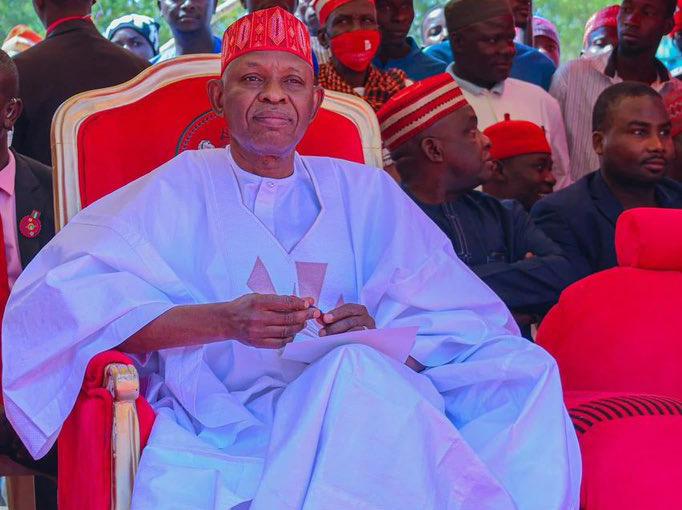
That is the deeper story gradually unfolding in Kano under Governor Abba Kabir Yusuf.
Three years ago, many expected another routine administration. What emerged instead was a government whose speed, visibility and emotional connection with the people have continued to redefine political expectations across Kano.
Today, the discussion is no longer whether Abba Kabir Yusuf is working. The real conversation is how far Kano may go if this pace continues beyond 2027.
Because beyond roads and contracts, Kano is witnessing something deeper. The state is gradually witnessing the return of public belief in governance.
Before 2023, many citizens had psychologically disconnected from governance. Pensioners protested repeatedly over unpaid entitlements. Foreign scholarship students cried publicly over abandonment. Young people increasingly believed politics only served a privileged few. But gradually, the atmosphere changed.
Governance stopped being something citizens merely heard on radio. It became something physically visible.
The administration aggressively launched major road and urban renewal projects including interventions around Tal’udu, Dan Agundi, Lodge Road, Court Road and several township roads across Kano metropolis.
Yet politically, the most important thing was not merely the projects themselves. It was the speed, visibility and energy behind them.
For many citizens, the government projected urgency and seriousness from the very beginning.
The foreign scholarship programme became one of the strongest emotional symbols of the administration. Under the previous administrations, Kano foreign students in countries including India and Uganda repeatedly cried out over unpaid tuition fees and near academic collapse. Several parents and advocacy groups publicly accused the government of neglecting the students.
Upon assumption of office, Governor Abba Kabir Yusuf approved billions of naira to settle outstanding liabilities and restore over 1000 Kano students back to classrooms abroad.
For many affected families, the intervention was not merely educational. It was emotional rescue.
In interviews aired by Freedom Radio Kano and other local stations between late 2023 and early 2024, several students narrated how they had nearly abandoned their academic dreams before the intervention arrived. One beneficiary in India reportedly described the intervention as “the difference between disgrace and dignity.”
Politically, the move projected the administration as a government willing to confront inherited crises directly instead of merely offering excuses.
Abba’s administration also declared a state of emergency in education and initiated massive school renovation exercises across the state.
Thousands of students benefited from NECO registration support, while recruitment processes for teachers and investments in learning infrastructure expanded. But beyond statistics, the interventions carried deeper political meaning.The government projected education as a pathway for poor children to compete again.
Within public discussions, many citizens increasingly interpreted the reforms as attempts to restore Kano’s historic educational reputation in Northern Nigeria.
Perhaps the most emotionally sensitive intervention involved pensioners. For years before 2023, retired civil servants repeatedly protested over unpaid gratuities and pension arrears.
Elderly pensioners were frequently seen struggling through verification exercises while many openly lamented hardship and neglect. Several pensioners reportedly died while waiting for entitlements.
The issue became more than an administrative problem. It became a moral issue. Governor Abba Kabir Yusuf’s administration later announced multiple releases running into tens of billions of naira for settlement of pension backlogs and gratuities inherited from previous administrations. Thousands of retirees reportedly benefited through various payment phases coordinated by the Kano State Pension Trustees.
What changed public perception most were the emotional reactions from beneficiaries themselves. Elderly pensioners openly praised the governor in interviews across Kano media platforms after receiving payments many had lost hope of ever seeing.
The Kano Internal Revenue Service also intensified reforms around revenue collection, compliance and digital restructuring.
Economic observers increasingly linked improved revenue confidence not only to enforcement, but to growing public belief that government activities were becoming visible again. The logic became simple: Visibility created confidence. Confidence encouraged cooperation.
Citizens are more willing to support government financially when they believe governance itself is functioning.
Another remarkable development is Kano’s gradually changing political atmosphere. For years, Kano politics was dominated by rivalries and factional tensions involving major actors such as Senator Barau I. Jibrin, Senator Kawu Sumaila, Hon. Kabiru Alhassan Rurum and others across APC and NNPP blocs. Yet recent years increasingly witnessed conversations around reconciliation, engagement and political coexistence.
The growing understanding between Senator Rabiu Musa Kwankwaso and some APC interests attracted national attention because many observers previously considered such political softening impossible. That perception of political maturity carries major implications for stability, governance and investor confidence in Kano.
Because Kano is not just another state politically. It is one of the major political nerve centres in Northern Nigeria.
Beyond the emotional and political dimensions of the administration, the scale of physical and institutional development witnessed across Kano within the last three years has equally remained difficult to ignore.
From massive road construction and urban renewal projects to aggressive interventions in education, healthcare, agriculture, water resources, youth empowerment, transportation, sanitation, civil service reform, pension settlement, housing, security support and revenue generation, the administration projected unusual speed and visibility across virtually all sectors of governance.
In education alone, foreign scholarship restoration, school rehabilitation, teacher recruitment and examination support programmes changed public conversations around learning and opportunity. In healthcare, general hospitals, primary healthcare centres and medical support services witnessed renewed government attention. In agriculture, farmers benefited from inputs, support initiatives and renewed emphasis on food production across rural communities.
In infrastructure, major roads, drainage systems and metropolitan renewal projects transformed several strategic parts of Kano. In social welfare, pension payments and salary interventions restored confidence among retired and serving workers. In governance and revenue administration, institutional reforms and digital restructuring strengthened public confidence in government functionality.
Even in political management, Kano began gradually witnessing a calmer atmosphere after years of intense rivalries and factional conflicts. Altogether, the administration created the impression of a government determined not merely to govern Kano, but to aggressively reposition the state socially, politically, economically and psychologically for a much bigger future.
Perhaps the most powerful thing about the present administration is this:
√ Kano has started believing again.
√ Young people increasingly believe government can still respond to ordinary citizens.
√ Pensioners increasingly believe retirement may no longer mean abandonment.
√ Students increasingly believe poverty may not permanently destroy educational dreams.
√ All sectors are properly working again after long period of neglect by previous administration.
√ And politically, that may become the administration’s greatest legacy.
Because roads may eventually deteriorate and buildings may require reconstruction. But once a government restores public belief in governance itself, it changes the psychology of society permanently.
That is why Kano today appears to be witnessing something bigger than physical development alone. It is witnessing political reawakening, emotional reconstruction and the gradual return of civic confidence. That is why the real question in Kano today is no longer whether Abba Kabir Yusuf is working. The real question is this: if three years could produce this level of political energy, visibility and public confidence, what exactly may Kano become if this momentum continues into the future?.
Sufyan writes from Abuja.