
By Munir Ibrahim Publisher
muneeribrahim2020@gmail.com
As Kano gradually moves toward the 2027 political cycle, public discourse is increasingly shifting from partisan rhetoric to a broader assessment of governance, leadership performance and the future direction of the state.
Across democratic societies, governments are often evaluated through physical projects such as roads, schools and public infrastructure. However, the most enduring political legacies are frequently built on something deeper: public confidence in governance and citizens’ belief that government can positively impact their lives.
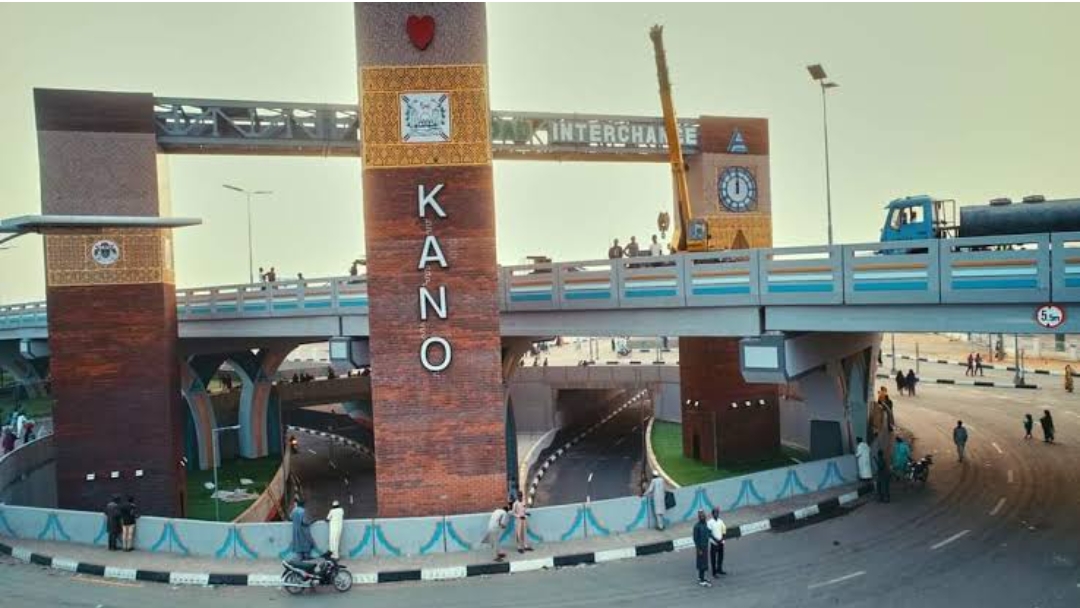
Over the past three years, the administration of Governor Abba Kabir Yusuf has sought to project both visible development and institutional responsiveness. Major road construction and urban renewal projects across strategic areas of Kano metropolis have improved infrastructure and reinforced the government’s development agenda. Yet beyond these physical projects, interventions in education, pension administration, healthcare, agriculture and public service reforms have arguably shaped public perception more significantly.
The restoration of the foreign scholarship programme stands out as one of the administration’s most symbolic achievements. Hundreds of Kano students studying abroad who faced uncertainty due to unpaid obligations were able to continue their education following government intervention. Similarly, the declaration of a state of emergency in education, school rehabilitation projects, examination support programmes and teacher recruitment initiatives have strengthened public confidence in the sector.
Equally important has been the settlement of pension and gratuity arrears. For many retirees who had waited years for their entitlements, government intervention represented not only financial relief but also the restoration of dignity and trust in public institutions. Combined with reforms in revenue generation and administrative processes, these efforts have contributed to the perception of a government determined to reconnect governance with ordinary citizens.
Beyond governance, Kano’s political landscape is also undergoing significant transformation. Historically, the state has been characterized by intense rivalries and highly competitive political blocs. Recent developments, however, suggest changing realities within the opposition, raising questions about its capacity to provide a compelling alternative ahead of the next election.
Political observers increasingly argue that successful opposition movements require more than historical influence or loyal followership. They must demonstrate organizational strength, credible leadership and a clear vision capable of inspiring public confidence. As political realignments continue to reshape the state’s power dynamics, the debate is no longer solely about personalities but about which political platform can best respond to the aspirations of the people.
This evolving reality places governance performance at the centre of political calculations. While critics and supporters may differ on the administration’s record, there is growing recognition that voters are paying closer attention to tangible outcomes rather than political slogans alone.
Ultimately, the most significant development in Kano may be the gradual return of civic optimism. Students increasingly see opportunities in education, pensioners feel acknowledged by government, and many citizens believe public institutions can still serve the common good.
Roads may age, buildings may require reconstruction, and administrations will eventually change. However, when a government succeeds in restoring public faith in governance, it leaves a legacy that extends beyond physical infrastructure. As Kano approaches 2027, the central question may not be who speaks the loudest politically, but who has done the most to earn and sustain the confidence of the people.