
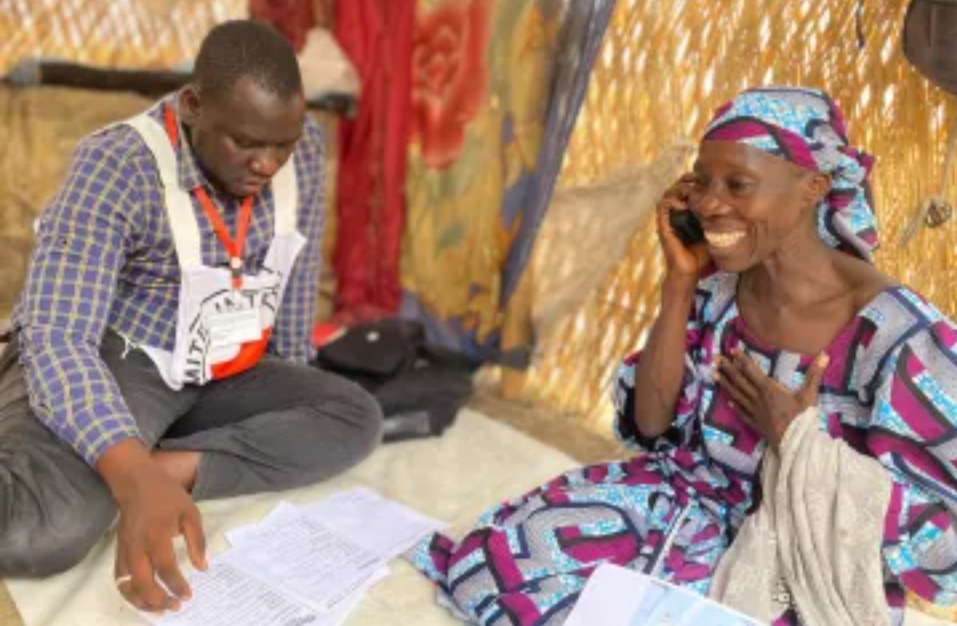
More than 227,000 people were registered as missing worldwide by the end of 2025, highlighting one of the world’s most enduring humanitarian crises as countless families continue searching for loved ones separated by armed conflict, violence, disasters and migration.
The figure, released by the International Committee of the Red Cross (ICRC) and the International Red Cross and Red Crescent Movement, represents people registered through the Movement’s global Family Links Network.
The humanitarian organizations, however, stressed that the number does not represent the total number of missing persons globally, noting that many families never report cases or are unable to access Red Cross services.
READ ALSO: ICRC Warns of Six Digital Threats Endangering Civilians in Modern Warfare
According to the organizations, every missing person represents a family living with uncertainty, often for years or even decades.
“Families separated by armed conflict, violence, disasters or migration endure one of the most painful forms of uncertainty: not knowing what has happened to a loved one,” the statement said.
“For many, the absence of answers becomes a lifelong burden.”
Nigeria Records About 17,000 Active Tracing Cases
In Nigeria, the Nigerian Red Cross Society (NRCS), working alongside the ICRC, announced that approximately 17,000 missing persons cases are currently under active tracing following a comprehensive review of its caseload.
The organizations explained that the figure reflects the number of cases for which they are currently able to maintain active engagement with requesting families, enabling humanitarian tracing efforts to continue.
They emphasized that the revised figure does not mean fewer people are missing in Nigeria, but rather represents cases where communication with families has been maintained.
“It is important to stress that this updated figure does not mean that fewer people are missing. Rather, it reflects the number of cases for which we are currently able to maintain active engagement with requesting families and therefore continue operational tracing activities,” the statement said.
Around 24,000 Cases Handled Over the Years
The NRCS and the ICRC disclosed that they have worked on approximately 24,000 missing persons cases across Nigeria over the years.
Their tracing activities have included:
– Door-to-door searches;
– Telephone calls;
– Red Cross Messages;
– Field visits;
– Engagement with community leaders;
– Collaboration with humanitarian partners;
– Cross-checking information from displacement and beneficiary records.
The organizations said these efforts are aimed at restoring family links and clarifying the fate and whereabouts of missing relatives.
Why Tracing Is Difficult
The humanitarian agencies described the search for missing persons as a complex process that can take many years.
According to the statement, tracing efforts are often hindered by:
– Continuing armed conflict and insecurity;
– Population displacement;
– Families relocating to new communities;
– Changes in telephone numbers;
– Limited access to conflict-affected areas;
– Logistical constraints.
These challenges frequently make it difficult to maintain communication with families or obtain new information about missing persons.
Comprehensive Review of Cases
As part of efforts to ensure transparency and accountability, the NRCS and the ICRC recently reviewed all active tracing cases across Nigeria.
During the exercise, humanitarian teams attempted to reconnect with families through:
– Telephone calls;
– Bulk SMS campaigns;
– Door-to-door visits;
– Meetings with community leaders;
– Verification using displacement and beneficiary records.
The organizations said they successfully re-established contact with many families and will continue supporting them through the tracing process.
However, they acknowledged that repeated efforts failed to reconnect with some families because many had relocated, changed contact details or returned to their communities of origin.
Without ongoing communication, they explained, active tracing cannot continue.
Restoring Family Links
The NRCS and the ICRC said they continue helping separated relatives reconnect by facilitating:
– Phone calls;
– Red Cross Messages;
– Family tracing through the international Family Links Network.
Where the whereabouts of a missing person remain unknown, families can request that a formal tracing case be opened to search for their loved one both within Nigeria and internationally.
The organizations noted that tracing often requires years of humanitarian work before answers emerge.
Call on Families to Stay in Contact
The NRCS and the ICRC urged families who have previously opened tracing requests to remain in contact with the organizations.
Maintaining communication, they said, allows humanitarian teams to:
– Share new information;
– Update case details;
– Pursue fresh tracing opportunities;
– Verify contact information when new leads emerge.
The organizations emphasized that staying connected is essential to sustaining active tracing efforts.
Commitment Remains Unchanged
Despite the enormous challenges, the ICRC and the Nigerian Red Cross reaffirmed their commitment to helping families separated by conflict and other humanitarian emergencies.
They stressed that while the number of active tracing cases in Nigeria now stands at about 17,000, the humanitarian need remains significant, with many more families still living in uncertainty.
“Every missing person represents a family waiting for answers, and every effort to provide those answers remains at the heart of our humanitarian mission,” the organizations said.
They pledged to continue restoring family links whenever possible and pursuing every humanitarian opportunity to clarify the fate and whereabouts of those who remain missing.