
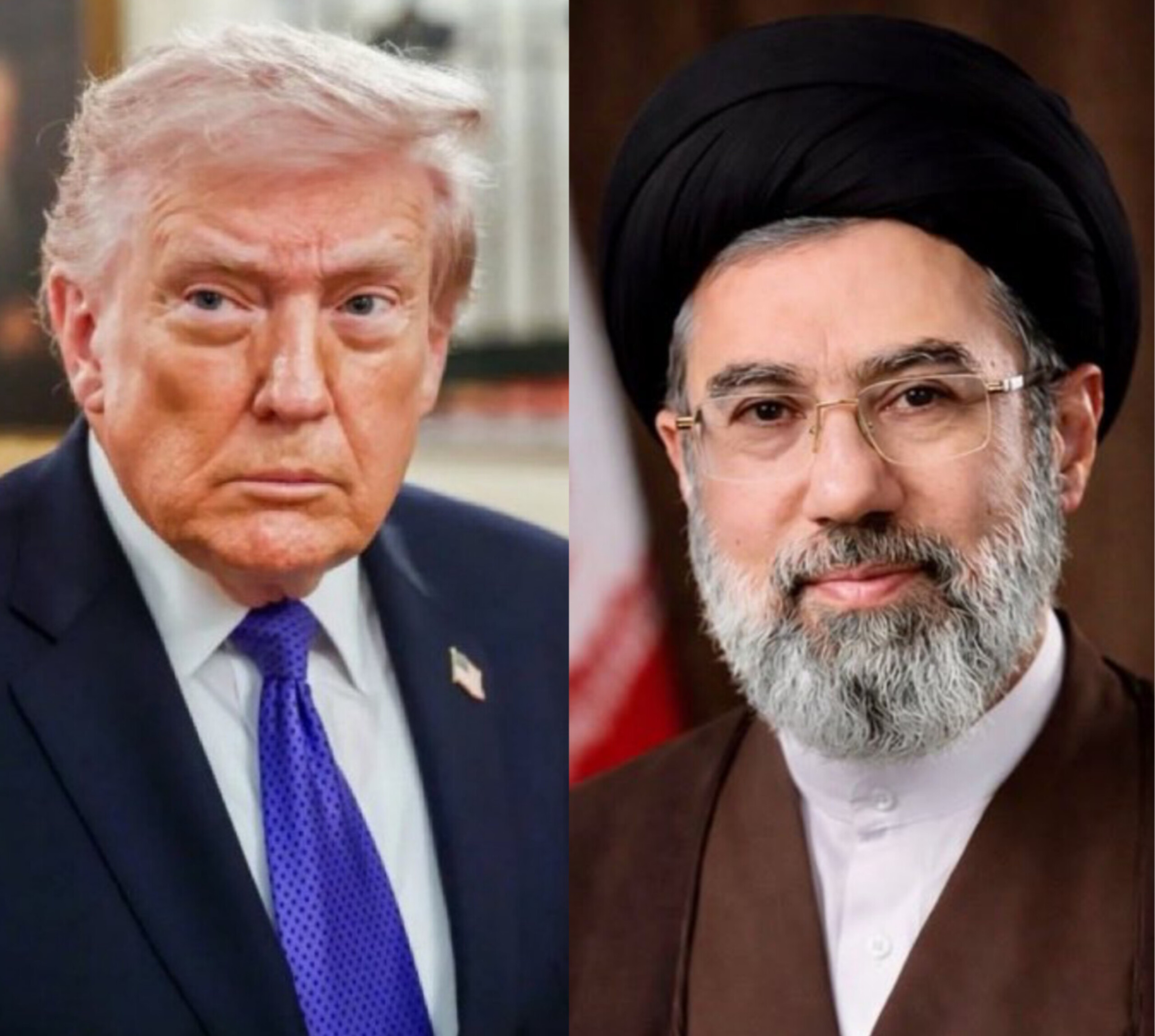
The escalating war between Iran and the United States has entered a dangerous new phase around the strategic Strait of Hormuz, with Washington and Tehran trading fresh attacks while commercial shipping comes increasingly under threat, including an Iranian attack on a Saudi oil tanker that left two crew members dead.
The latest confrontation erupted after the United States launched a fresh wave of strikes against Iranian military targets on Tuesday, September 1, prompting Iran to retaliate with missiles and drones against American and allied positions across the Gulf.
The exchange, described by Reuters News Agency as the most intense direct confrontation between the two sides since July, has heightened fears that the conflict could spread further across the Middle East and cause even greater disruption to one of the world’s most important energy corridors.
READ ALSO: Pakistan Seeks To Defuse US-Iran Crisis Amid New Sanctions Threat as Army Chief Visit Tehran
US Central Command said its latest strikes targeted Islamic Revolutionary Guard Corps (IRGC) air-defence systems, radar installations, maritime assets, mine-laying capabilities and communications facilities along Iran’s southern coast.
Iran responded by launching attacks against US positions in Bahrain, Jordan, Kuwait and Iraq, with Tehran saying its operations were aimed at forcing American forces out of the region.
While Iranian attacks have caused alarm across the Gulf, there were no immediately confirmed reports of significant U.S. military casualties from the latest retaliation.
Saudi Tanker Attack Puts Crews In Danger
The confrontation has increasingly spilled over into commercial shipping.
Two super tankers carrying Saudi crude were attacked by projectiles while passing through the Strait of Hormuz on Monday, with the vessels identified as the Saudi-flagged Sidr and the Liberian-flagged Senegal Prosperity.
Both tankers had loaded about two million barrels of Saudi crude before entering the waterway.
The attack on Sidr proved particularly deadly, with Saudi authorities reporting that two Filipino crew members were killed.
The incident represents a major escalation because commercial vessels carrying energy supplies are now being caught directly in the military confrontation between Iran and the United States.
Reuters reported that the attacks occurred near Khasab, Oman, and came amid an increasingly dangerous environment for vessels attempting to navigate the Strait of Hormuz.
IRGC Claims Two Tankers Hit Naval Mines
In a separate and potentially more serious development, Iran’s Islamic Revolutionary Guard Corps claimed that two oil tankers struck naval mines and caught fire while attempting to pass through the Strait of Hormuz.
The IRGC said the vessels had entered a maritime route that Tehran considered unauthorised and warned shipping companies against following routes designated by the United States.
The claim could not immediately be independently verified, and Iran did not provide sufficient details identifying the vessels, their operators or the circumstances surrounding the alleged explosions.
Nevertheless, the claim has heightened concern over the possibility that naval mines could become another major weapon in the struggle over the waterway.
The development is particularly significant because the United States said its latest strikes against Iran included attacks on Iranian mine-laying capabilities.
Qatar Rejects Hormuz As “Bargaining Chip”
Qatar has strongly condemned Iran’s attack on the Saudi tanker Sidr, particularly the deaths among its crew.
In a statement issued on Wednesday, Qatar’s Ministry of Foreign Affairs described the attack as a blatant violation of international law and freedom of maritime navigation and said it violated UN Security Council Resolution 2817.
Doha also reiterated its categorical rejection of the use of the Strait of Hormuz as a “bargaining chip”, calling for the waterway to be reopened without conditions.
Qatar stressed that freedom of navigation through the strategic passage is an established principle that cannot be compromised, warning that continued closure of the strait threatens the vital interests of regional states and the global economy.
The Qatari government expressed full solidarity with Saudi Arabia and support for measures taken by Riyadh to protect its assets.
Qatar separately condemned renewed Iranian attacks on Jordan, Bahrain and Kuwait, describing them as violations of the sovereignty and territorial integrity of those countries and urging an immediate halt to military action.
Doha called on all sides to avoid further escalation and return to dialogue and negotiations.
Hormuz Shipping Traffic Falls Sharply
The renewed fighting has caused commercial shipping through Hormuz to fall dramatically.
Preliminary Kpler data showed that only four commodity vessels transited the Strait on Tuesday, compared with 10 the previous day and a 10-day average of about 13.
The vessels included a very large crude carrier, a Panamax tanker, a Kamsarmax carrier and an intermediate tanker. Three were leaving the Strait while one was entering.
The figures remain subject to revision because ships sometimes switch off their tracking transponders in dangerous waters.
Before the conflict, the Strait of Hormuz carried approximately one-fifth of global oil shipments, making it a critical artery for international energy supplies.
The current disruption has therefore become a global economic concern rather than simply a regional security problem.
Oil Prices Rise As Markets Fear Prolonged Crisis
Oil markets immediately reacted to the latest escalation.
Brent crude rose sharply on Tuesday, settling at around $94.65 a barrel, while US West Texas Intermediate climbed above $90.
On Wednesday, Brent remained volatile as traders assessed the possibility of prolonged disruption to Gulf oil and LNG exports.
The prospect of a prolonged confrontation around Hormuz has raised fears of higher fuel prices, increased shipping insurance costs and renewed inflationary pressure at a time when governments around the world are already struggling with elevated energy and transportation costs.
The economic implications could become considerably more severe if attacks on tankers continue or if the number of vessels able to safely pass through the Strait falls further.
Iran Tightens Pressure On Shipping
Iran has also expanded restrictions on vessels attempting to navigate the Strait.
According to Reuters, Tehran has increased the number of tankers on its blacklist to 56 vessels, warning that ships deemed non-compliant with Iranian navigation rules could face fines, confiscation or detention.
The measures have further complicated efforts by shipping companies to determine which routes remain safe and legally acceptable.
The confrontation has consequently created a complicated maritime environment in which vessels face threats from military strikes, projectiles, potential mines and conflicting navigation instructions.
Civilian Deaths Add To Escalation
The latest American offensive has also generated reports of civilian casualties inside Iran.
Iranian authorities said a US strike near Sirik, in southern Iran, struck an area where a wedding gathering was taking place, killing several people, including a child, and wounding dozens.
Iranian authorities reported differing casualty figures, while Washington denied deliberately targeting civilians and said the circumstances were being investigated.
The reported civilian deaths have added to anger inside Iran and intensified demands for retaliation against the United States and its regional partners.
Trump Claims Increasing Control Over Hormuz
U.S. President Donald Trump has continued to portray the Strait of Hormuz as a key element of the American military campaign.
Trump has previously suggested that Washington has achieved substantial control over the waterway and has even floated the provocative idea of calling it the “Trump Strait.”
The proposal has no automatic effect on the internationally recognised name or legal status of the waterway.
Iran, meanwhile, has rejected any attempt by Washington to claim control or sovereignty over the Strait.
The competing claims underline the strategic importance of Hormuz, which has effectively become one of the principal theatres of the U.S.-Iran war.
Qatar Warns Of Wider Regional War
Qatar’s latest statements reflect growing concern among Gulf states that the conflict could escape the direct US-Iran battlefield and engulf neighbouring countries.
Doha has condemned Iranian attacks against Saudi Arabia, Bahrain, Kuwait and Jordan while simultaneously urging an end to military operations and a return to negotiations.
Qatar’s position is also driven by its own economic exposure. The country is one of the world’s major liquefied natural gas exporters and relies heavily on safe maritime routes through the Gulf.
A prolonged closure or militarisation of Hormuz could therefore severely affect Qatar’s energy exports as well as global LNG supplies.
Strait Becomes Centre Of US-Iran War
The latest developments demonstrate how the Strait of Hormuz has evolved from a strategic maritime chokepoint into the central battleground of the wider US-Iran confrontation.
For Washington, keeping the waterway open is essential to protecting global energy flows and preventing Iran from using maritime restrictions as leverage.
For Tehran, control over or the ability to disrupt the Strait provides one of its most powerful strategic tools against the United States and its regional allies.
For Gulf states such as Saudi Arabia, Qatar, the UAE and Kuwait, however, the confrontation represents a direct threat to their economic lifelines.
The killing of tanker crew members, attacks on commercial vessels, allegations of naval mines and the dramatic fall in shipping traffic have demonstrated the growing cost of the conflict.
With Iran continuing to retaliate against US and allied targets, Washington threatening further action and regional governments demanding restraint, the Strait of Hormuz now stands at the heart of a crisis with consequences extending far beyond the Middle East.